


October 16, 2026 11 min read
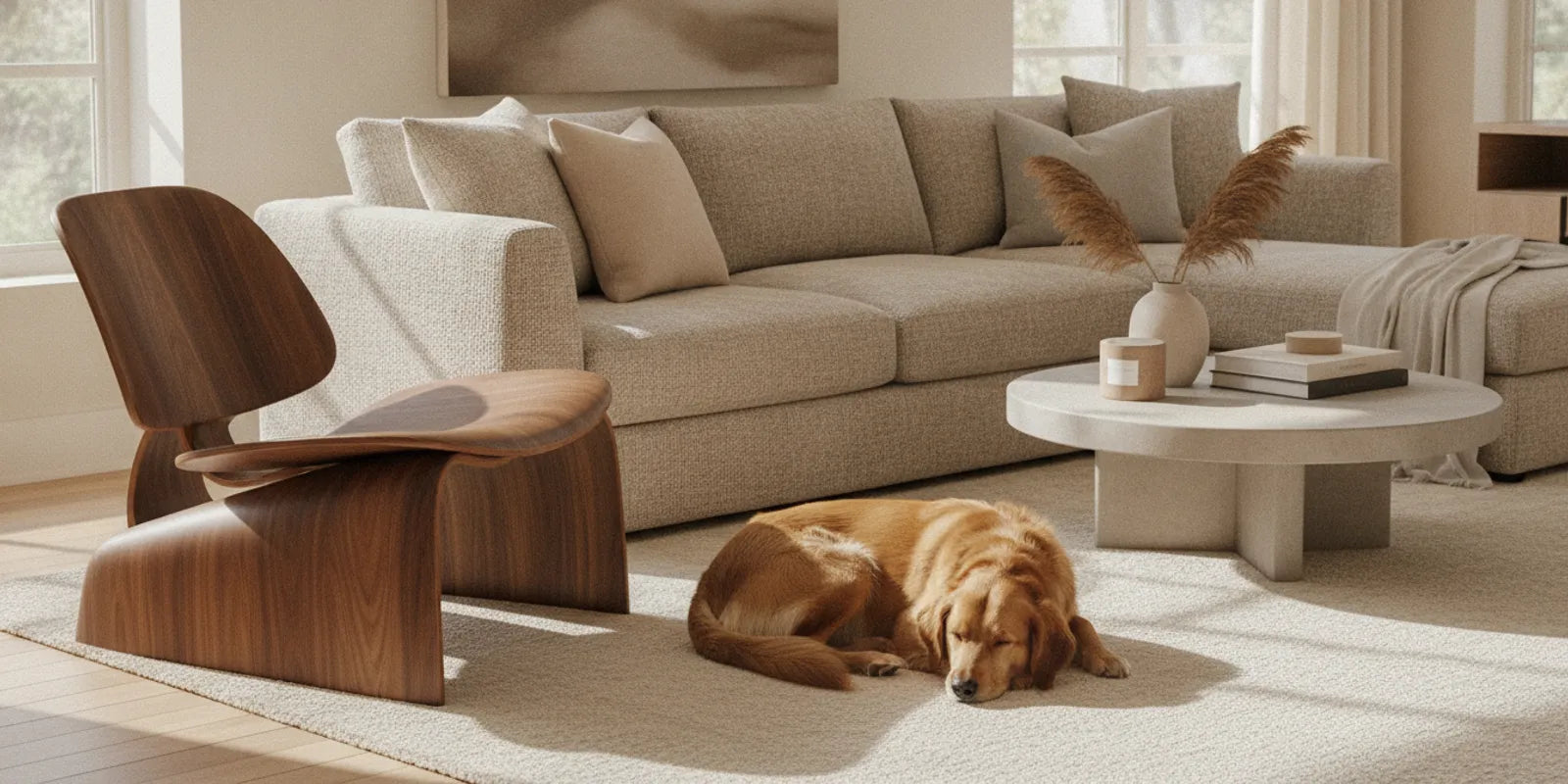
Choosing pet friendly furniture is less about finding a piece that can withstand anything and more about matching materials, shapes, and care routines to the way your home works. A cat that likes to climb, a dog that sheds, and a household with muddy paws each bring different considerations. Start with your pet’s habits, then look for furniture that balances practical upkeep with the design you want to live with.
There is no single fabric or finish that makes furniture right for every pet. A useful choice fits the particular demands of your room: how often your pet gets on the sofa, whether fur is easy to see, how much time you can spend cleaning, and whether claws or chewing are concerns. It should also suit the people who share the room. A protective cover that stays on all day may be practical, but it should not make the room feel like a temporary arrangement.
Think of pet friendliness as a set of trade-offs. A tightly woven surface may be easier to brush clean than a loose loop, while a smooth leather-like surface can make fur simple to wipe away but may show scratches. A darker color can disguise some marks but make light-colored hair stand out. The best choice depends on your pet and your preferred look, not on a universal promise of stain-proof or scratch-proof performance.
Before shopping, write down the two or three issues you most want to solve. If shedding is the main concern, prioritize a surface that is easy to vacuum and a color that works with your pet’s coat. If paws bring in dirt, look at cleanability and how close the furniture sits to the floor. If a cat scratches upholstery, consider whether the piece can be protected and whether the room offers a more appealing scratching surface.
Fabric construction matters as much as color. Very open weaves and looped textures can catch claws or trap hair. A tighter, smoother weave may be simpler to brush or vacuum. Still, “tight weave” does not automatically mean indestructible. Check care instructions, ask what cleaning methods are permitted, and look for a fabric sample if one is available. A sample lets you see the real texture and color in your room’s light.
Leather and similar smooth surfaces have a different set of advantages and drawbacks. Fur may be easier to remove from a smooth surface, but claws can leave marks. Some people like the character that develops with wear; others prefer a surface that stays visually even. Do not assume every leather finish responds to cleaning in the same way. Follow the maker’s care information and test any cleaner in an inconspicuous place first.
Removable covers can make routine care more manageable if the manufacturer confirms that they are washable and explains how to clean them. A cover that cannot be removed may still be suitable, but you will need to follow its specified cleaning method. Avoid buying based on a label or a showroom impression alone. Ask for the full care guidance, including what to do with fresh spills and whether professional cleaning is recommended.
When comparing sofas or chairs, start with the construction of the upholstery rather than a broad label such as “pet fabric.” If you are considering a larger seating piece, browse the sofa collection and compare each product’s listed material and care details. For other seating options, the seating collection can help you consider how different forms fit your room.
Color is a practical design decision, not just a style choice. Fur is usually easiest to notice when it contrasts sharply with the upholstery. A pale pet may leave visible hair on a dark seat, while a dark pet may stand out on a light one. A mid-tone or mixed-color fabric can soften that contrast, although no color eliminates cleaning.
Look at the color in natural daylight and under your usual evening lighting. Also consider the other surfaces nearby. A chair that coordinates with the floor, rug, and wood tones can make occasional hair less visually prominent. If you love a light or dark fabric that contrasts with your pet, choose it with a realistic cleaning routine in mind rather than ruling it out automatically.
Patterns can help disguise small variations between cleanings, but busy patterns are not a substitute for care instructions. Texture and pile height also change how a color reads. A fabric that looks smooth in a small online image may show hair differently at full scale. Review detailed product information and ask the seller for a fabric sample when possible.
Consider the parts of furniture your pet can reach. Low seats can be easy for an older dog to access, but they may also invite a pet that is not allowed on the furniture. A higher base can keep fabric farther from dirt tracked across the floor. A raised leg can make vacuuming beneath a sofa or chair easier; a low, enclosed base may reduce the space where toys and fur collect. Choose the form that fits your rules and cleaning routine.
For wood furniture, notice whether exposed corners and edges sit in a high-traffic path. A side table near a doorway may face more bumps than a piece against a wall. Keep water bowls away from wood surfaces and wipe spills promptly, since standing moisture can affect many finishes. Do not assume every wood finish has the same resistance to scratches, moisture, or cleaning products. Check the care information for the specific piece.
Storage can make the room easier to reset. A closed cabinet or basket gives toys, grooming tools, and throws a place to go when the room is in use by guests. A table with a stable top can hold everyday items out of reach, while a shelf can keep breakable objects above a pet’s path. Browse living-room furniture and storage furniture as you plan the whole arrangement, rather than treating the sofa as the only important decision.
Different routines call for different priorities. A dog that settles on the sofa may make washable throws and upholstery care your first concerns. A dog that mostly naps on a floor bed may put more emphasis on a stable coffee table, clear walking routes, and a place for toys. If your dog comes inside from wet or dusty walks, arrange a washable mat near the entry and consider how close light upholstery sits to the path from the door.
A cat may be more likely to climb, perch, or scratch. Look at the height and stability of side tables and shelves, and keep fragile objects away from favorite routes. Put a scratching post near a place the cat already visits. If the cat jumps onto a chair, a removable throw can protect the chosen landing spot while remaining easy to take off when company comes. Keep in mind that a fabric that resists catching claws is not necessarily resistant to every scratch.
For a senior pet, think about access and traction. A high seat may be difficult to reach, while a low bed with a steady surface nearby can be easier to approach. Leave enough space around furniture for turns and comfortable movement. For a young, energetic animal, prioritize a stable arrangement and keep breakable décor off low tables. These are room-planning considerations, not claims about the performance of a particular product.
Also consider how many pets share the room and where their routines overlap. If two animals compete for the same sunny spot, adding a second resting place may protect the furniture better than buying a more elaborate cover. If shedding is seasonal, a regular brushing and vacuuming routine may matter more than selecting a particular upholstery shade. A brief inventory of these habits helps separate essential features from nice-to-haves.
Use this comparison as a starting point. Exact performance depends on the material, construction, finish, and the care guidance for the particular product.
| Choice | Possible advantage | Trade-off to consider | What to check |
|---|---|---|---|
| Tightly woven upholstery | May be easier to brush or vacuum than an open texture | Still may snag, stain, or show wear depending on fiber and construction | Weave, cleaning code, care instructions, and sample appearance |
| Smooth upholstery | Fur may be easy to wipe away | Claw marks or scratches may be more noticeable | Material type, finish, recommended cleaner, and scratch expectations |
| Mid-tone or patterned fabric | Can reduce the contrast of loose hair and minor variation | May not suit every room palette or hide every mark | Color in room lighting, texture, and sample size |
| Raised-leg seating | Can make floor cleaning beneath the piece easier | Leaves an open path beneath furniture and may not suit every pet | Clearance, stability, and whether toys can roll underneath |
| Protective throw or cover | Creates a removable layer on a high-contact area | Can shift or change the look of the furniture | Fit, washability, colorfastness, and care directions |
Protection works best when it is simple enough to maintain. Place a washable throw on the seat or arm your pet chooses most often. Choose one that stays in place and can be cleaned according to its label. Keep a lint roller or upholstery brush nearby for quick tidying, and vacuum with an attachment suited to the furniture’s care instructions. Small, regular tasks are often easier than waiting until fur and debris build up.
Give pets an appealing alternative to the furniture. A comfortable pet bed near the family seating area can keep your companion close while giving the sofa a break. Put scratching posts where a cat already tends to scratch, rather than in an inconvenient corner. For dogs, a mat near an entry can help catch dirt before it travels farther into the room. These steps do not guarantee that a pet will avoid furniture, but they make the room easier to manage.
Set household expectations consistently. If a pet is allowed on the sofa, a designated blanket can mark the preferred spot. If not, redirect calmly and make the pet’s own resting place inviting. Trim claws regularly if that is part of your pet’s normal care, and keep chewing or scratching objects away from furniture. Never rely on a furniture purchase to change an animal’s habits.
Start with a floor plan, even if it is a simple sketch. Mark doorways, windows, heating vents, and the routes people and pets take through the room. Add the sofa, chair, or table dimensions from the product listing. Then mark clearance around each piece, including the space needed to open a cabinet or pull a chair away from a table. This makes it easier to spot a narrow passage or an awkward corner before placing an order.
Measure the route from the entry to the room, not only the furniture’s final footprint. Door widths, hall turns, stair landings, and elevator dimensions can affect whether a large item can reach its destination. Check current product and delivery information for the specific item before purchasing. Delivery terms can change, so confirm them directly rather than relying on an old article or another shopper’s experience.
For upholstery, compare color and texture samples with your flooring, nearby wood, and your pet’s coat. Look at the swatch in daylight and in the evening. If you have a sample, place it near the pet’s usual resting spot and observe whether hair or lint is prominent. Do not scrub, apply cleaners, or deliberately expose the sample to damage unless the seller’s instructions say that is an appropriate test.
Finally, picture an ordinary day rather than a staged room. Where will the pet rest while you read? Where will toys go at night? Can you clean under the seat without moving several objects? Could a throw be removed quickly before guests arrive? These questions help distinguish furniture that merely looks suitable from a layout you can maintain comfortably.
Good questions can prevent a mismatch between an attractive product image and the demands of daily life. Before choosing, confirm the material and finish for the exact item, then ask what routine care is appropriate. If you are weighing chairs, the chair collection is a place to compare forms; read the details for each chair rather than assuming all upholstery or wood is alike.
Measure the path into the room as well as the spot where the furniture will sit. Check doorways, hallways, stairs, and turns. This is useful for all furniture, and especially for large seating pieces that will be difficult to reposition once the room is arranged. Gingko’s frequently asked questions and buying information offer additional places to review general shopping details.
Plan the room as a set of zones. Keep the main walking route clear so pets and people can move through without brushing against furniture corners. Place a pet bed in a calm area that still feels connected to the room. Keep food and water on a washable mat, away from upholstered pieces and wood surfaces. A defined spot for toys helps reduce clutter and makes it easier to tidy before guests arrive.
Use rugs thoughtfully. A rug can catch some dirt near an entry or define the seating area, but its pile and backing affect how easily it can be cleaned. Check its care instructions and keep its edges flat to reduce tripping. If your pet is prone to accidents, factor that into the rug material and placement. Avoid placing a rug where it blocks a door or makes a chair difficult to move.
Choose a few coordinated materials rather than trying to make every surface identical. A walnut-toned table can bring warmth beside a neutral sofa, while a patterned throw adds visual interest and an easy-to-clean layer. If you are planning around a sofa, a coffee table collection can help you compare central surfaces, and end tables can provide a smaller landing place beside a seat. Check edge shape, stability, and placement so the table works for both people and pets.
No material should be assumed to be immune to scratches, stains, or wear. Construction and care requirements vary. Review the product’s specifications and follow its cleaning guidance. A throw, pet bed, and consistent routine can reduce exposure, but cannot guarantee a surface will remain unchanged.
Not for every household. Fur may be easy to wipe from some smooth surfaces, but claws can leave marks, and care needs differ by material and finish. Compare those trade-offs with the fabric options available and consider which signs of wear you find acceptable.
A color close to your pet’s coat may make loose hair less conspicuous, while a contrasting color can make it stand out. Mid-tones and small patterns can soften contrast, but the lighting and texture also matter. Consider a sample beside your pet and in the room before settling on a color.
Use a washable throw in the spot your pet prefers, keep a brush or vacuum attachment accessible, and clean spills according to the manufacturer’s directions. A nearby pet bed gives your companion another comfortable place to rest. Choose the furniture based on its actual care instructions, not on a general claim that it is pet-proof.
Pet friendly furniture is the result of practical choices made together: the right upholstery for your cleaning habits, a finish suited to the room, a layout that leaves clear paths, and a comfortable place for your pet. Compare care details before buying and decide which trade-offs feel right for your home. With that groundwork, you can create a living room that feels considered, comfortable, and ready for everyday life.