


October 14, 2026 11 min read
Credenza furniture combines a long, low profile with enclosed storage, making it a useful choice when a room needs both a composed surface and a place to put things away. In a living room, dining space, or entry, the right piece can make storage feel like part of the room's design rather than an afterthought. The best choice depends on what you plan to store, how much wall space you have, and the role you want the piece to play.
Explore how to buy from Gingko
A credenza is generally a low, wide cabinet with a flat top and storage behind doors or drawers. The term describes a form more than one fixed configuration. Some credenzas have a clean, uninterrupted front; others have visible legs, drawers, shelves, or a combination of compartments. They can be made in different materials and styles, so the name alone does not tell you the exact construction, finish, or storage layout.
The low horizontal shape is central to its character. It creates a surface without the height of a tall cabinet and can visually anchor a long wall. Inside, a credenza can keep items close at hand while reducing visible clutter. That pairing of a broad top and concealed storage is why the form works across several rooms.
Credenzas are related to sideboards and buffets, and retailers may use those terms in overlapping ways. A sideboard commonly refers to a serving or storage cabinet in a dining room. A buffet may also describe dining-room storage, sometimes with a taller profile. Names are not always applied consistently, so compare dimensions, interior layout, and intended function instead of relying on the label alone.
A credenza can solve different storage problems, depending on its proportions and interior. Before browsing, list the objects that need a home and how often you reach for them. That simple step helps distinguish a cabinet that merely looks right from one that supports your daily routine.
A cabinet does not need to serve only one purpose. A living-room credenza may hold books and media accessories while giving a lamp and a few collected objects a place to sit. Still, assigning a primary function first makes it easier to prioritize the right interior layout and location.
When a piece must handle several jobs, rank them. Put the most frequent or space-sensitive task first, then see whether the remaining functions fit around it. A media setup may require specific cord access, while dining storage may need wide compartments for serving dishes. If those needs conflict, it may be more comfortable to choose a cabinet for the main job and find a separate solution for the other one.
Think about what should stay visible. Objects reached each day may belong in an easy-access drawer or on the top, while less frequent items can sit behind doors. This sorting exercise can clarify whether you need more drawers, more closed compartments, or a mix. It can also keep you from prioritizing a feature that looks appealing but does not support the way you organize your home.
Start with the wall and the paths through the room. Measure available width, height, and depth, then note nearby doors, windows, heating vents, outlets, and furniture. A piece can fit against a wall and still make the room harder to move through if doors open into a walkway or it narrows a route around a sofa.
A credenza can sit along a broad wall, behind a sofa when the depth allows, or beneath artwork. If it will support a television, consider screen height and viewing distance along with the cabinet's top. A piece that is too tall can raise the screen uncomfortably; one that is too narrow may not provide the balance you want. Check component fit, cable routes, and ventilation.
For a room plan, compare the cabinet with other mid-century living-room furniture. If a television is the main reason for adding storage, browse TV cabinets as well. Their layouts may better match equipment and storage needs.
Place a credenza where it can support meal preparation or serving without interrupting chair movement. Leave enough room for dining chairs to pull out, and check that cabinet doors or drawers can open when the room is occupied. If you plan to store large platters or folded linens, compare those items with interior dimensions rather than estimating from the outside.
Measure the narrowest point of the passage, not just the stretch of wall where the cabinet will stand. Account for the cabinet's full depth and space to open doors or drawers. In a compact entry, a shallower piece may be more practical than a deeper cabinet, even if it provides less interior capacity.
Good proportions come from the room, nearby furniture, and what the cabinet needs to hold. Write down maximum dimensions before browsing, then compare each candidate against that envelope. Include baseboards and wall trim in measurements. If a cabinet is going below a window or artwork, measure from the floor to the lowest point of the feature.
For a television arrangement, compare the screen and cabinet as a pair. For a dining room, decide whether the top will be a working surface or mainly a place for display. In an entry, depth and walking clearance may matter more than total capacity.
Imagine furnishing a living room and choosing one wall for storage. Mark its usable width and the maximum depth that leaves a comfortable route past the sofa. Note whether the television, outlet, or floor vent affects the position. Finally, measure the largest items intended for the cabinet. This order prevents selecting a piece by width and then discovering its interior or footprint does not suit the room.
If the cabinet will sit behind a sofa, compare the sofa back and cabinet height. You may want the top visible, or prefer a lower profile that does not interrupt the view across the room. Beneath a window, check that the piece does not cover trim or make window access awkward. These small relationships shape how settled the furniture feels after it arrives.
Exterior appearance is easy to judge in a product photo; interior usefulness takes a closer look. Doors conceal larger objects and create a calm front. Drawers can make smaller items easier to sort, but dimensions and depth determine what fits. Open shelves provide quick access and display space, although they leave contents visible and need regular tidying.
Some designs combine these options. Think through the items you plan to keep inside, then match the layout to them. For electronics, look for verified details about cord access, internal clearances, and ventilation. These features differ by model; do not assume every credenza is configured for media equipment.
For broad storage browsing, see Gingko's storage furniture collection and cabinet collection. If display space is part of the plan, the bookshelf collection offers another way to organize items while keeping them visible.
Material changes a cabinet's appearance, feel, care needs, and expected performance. Solid wood has natural grain and variation, so two pieces may not look identical. Veneer has a real-wood surface over a different core, while engineered panels and other materials have their own characteristics. Read product details and compare the actual construction of the piece rather than assuming one material name answers every question.
For solid walnut furniture, grain and color are part of the character. Natural variation is expected, and finish affects how the surface looks and how it should be cared for. Ask which materials appear in the frame, doors, shelves, and drawer components; the description of one visible surface may not explain every part of the cabinet.
Joinery and hardware affect how doors and drawers operate over time. Look for clear product information about construction, hinges, drawer movement, and care. If a detail is not listed, ask the retailer rather than treating a general collection statement as a specification for an individual item. Gingko describes its furniture as designed in California and built in Asia; check the specific product page for details relevant to a particular cabinet.
When a credenza is part of a broader room plan, consider whether its wood tone, lines, and visual weight work with the rest of the furniture. Gingko's sofa collection can help you consider how a storage piece might relate to the room's larger seating shapes and finishes.
The right category depends on the room, storage volume, and visual effect you want. This comparison is a starting point: dimensions and features vary, so check each individual listing before deciding.
| Furniture type. | Typical profile. | Works well for. | What to check. |
|---|---|---|---|
| Credenza. | Low and wide, often with enclosed compartments. | Combining a broad surface with concealed storage. | Depth, door and drawer layout, and fit with the wall or equipment. |
| Sideboard or buffet. | Usually a dining-area cabinet; height and layout vary. | Dining essentials and a serving surface. | Interior space for dishes and clearance around the table. |
| TV cabinet. | Storage designed around a television setup, depending on model. | Media equipment, accessories, and related items. | Screen proportions, cord routing, ventilation, and component fit. |
| Bookcase. | Taller and more open, with shelves. | Books and objects that you want to see and reach. | Available height, shelf spacing, stability, and visual clutter. |
| Console table. | Often narrow, with a lighter or more open profile. | A landing surface where deep storage is not essential. | Depth, stability, and whether open storage meets your needs. |
Choose a credenza when a long, low form and enclosed storage fit the room. A taller case may make better use of vertical space, while a narrow console may suit a passage where depth is limited. Product dimensions and construction matter more than the category name.
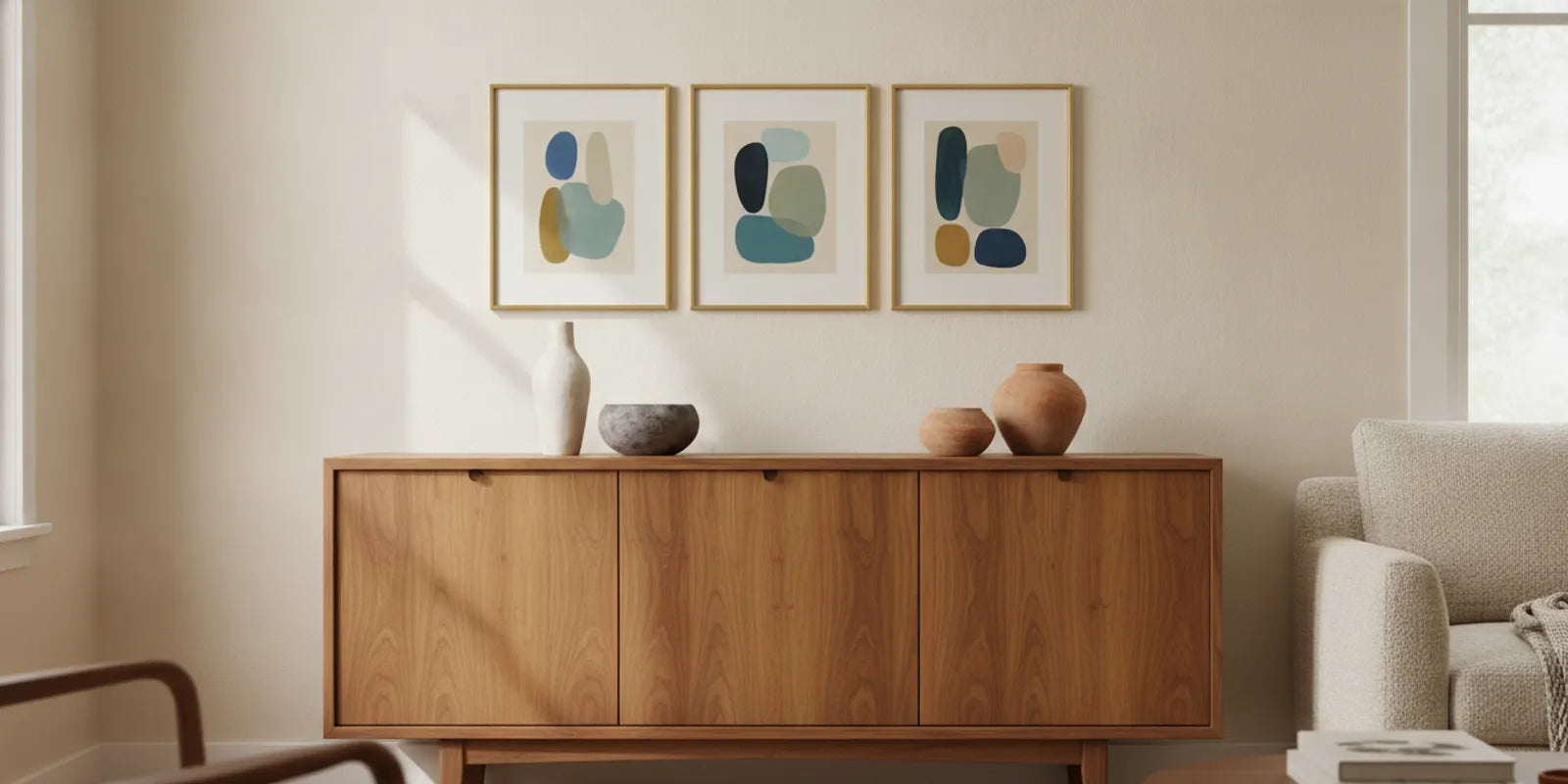
Mid-century modern interiors often pair clean lines with functional forms and natural materials. A credenza fits this vocabulary, but it does not need to match every other piece. A walnut cabinet can bring warmth to a room with upholstered seating, while restrained styling on top keeps its profile easy to read.
Start with the cabinet as a substantial horizontal element. Balance it with a larger artwork or a small group of objects rather than filling every inch of the surface. Leave open space so the shape and wood grain remain visible. If the room already has strong patterns or finishes, a quieter cabinet front may help settle the composition.
Consider contrast and continuity. Similar wood tones can connect furniture across a room, while a subtle difference can keep the arrangement from looking overly matched. Repeat a color or material in small details, such as a lamp, frame, or ceramic piece, to connect objects without making the whole room uniform.
The broad top is part of a credenza's appeal, but it can become a catchall if every object lands there. Give the surface a clear purpose. It might hold a lamp and a small tray for everyday items, or display a few meaningful objects. Leave enough open area for the eye to rest and for the surface to remain practical.
Vary height and shape when arranging objects. A lamp or taller vase can balance horizontal artwork, while a low bowl or a stack of books adds a smaller layer. Group a few pieces together rather than distributing many small objects across the cabinet. The arrangement can feel collected without competing with the furniture itself.
Consider what sits above the credenza, too. A large framed piece can reinforce its horizontal line, while a mirror can reflect light and help a narrow room feel more open. Keep the combined arrangement in proportion to the cabinet and surrounding wall. Before hanging anything, lay out positions on paper or mark the area with removable tape.
Most disappointments come from a mismatch between the cabinet, the room, and the items inside, not from the name of the furniture. A few checks can catch problems before a decision is final.
Before placing an order, review the listing and confirm details that affect your room and routine. Furniture descriptions can differ from one item to another, even within the same collection.
Policies, product details, and availability can change, so rely on current product and policy information rather than an old listing or general assumption. Gingko's frequently asked questions and shipping information can help you review current guidance. For a question about one specific piece, use the contact and buying information to reach the team.
Ask Gingko about choosing a cabinet
The terms overlap in furniture retail, and there is no single naming convention across every seller. Both commonly describe storage cabinets with a broad top. Compare dimensions, storage layout, and intended room function instead of treating the label as a precise specification.
Some credenzas may suit a television, but suitability depends on the piece's dimensions, top, cord access, internal clearances, and ventilation. Confirm those details for the specific model and equipment before setting up a screen.
No. Some have doors and shelves, some have drawers, and others combine enclosed and open compartments. Check product photographs and specifications to understand the layout.
There is no single clearance that fits every room. Leave enough space for nearby doors, drawers, dining chairs, and regular paths through the room. Mark the intended footprint on the floor and test movement before deciding.
Measure the largest objects you want to store, then compare those measurements with the cabinet's listed interior dimensions and shelf configuration. Exterior dimensions do not tell you how much usable space is inside.
A well-chosen credenza brings together a useful surface, storage that matches your routine, and proportions suited to its place in the home. Measure first, identify what needs a home, and compare each piece's materials, layout, and current product details. With those basics in view, you can choose a cabinet that feels considered and functions comfortably in the room.