

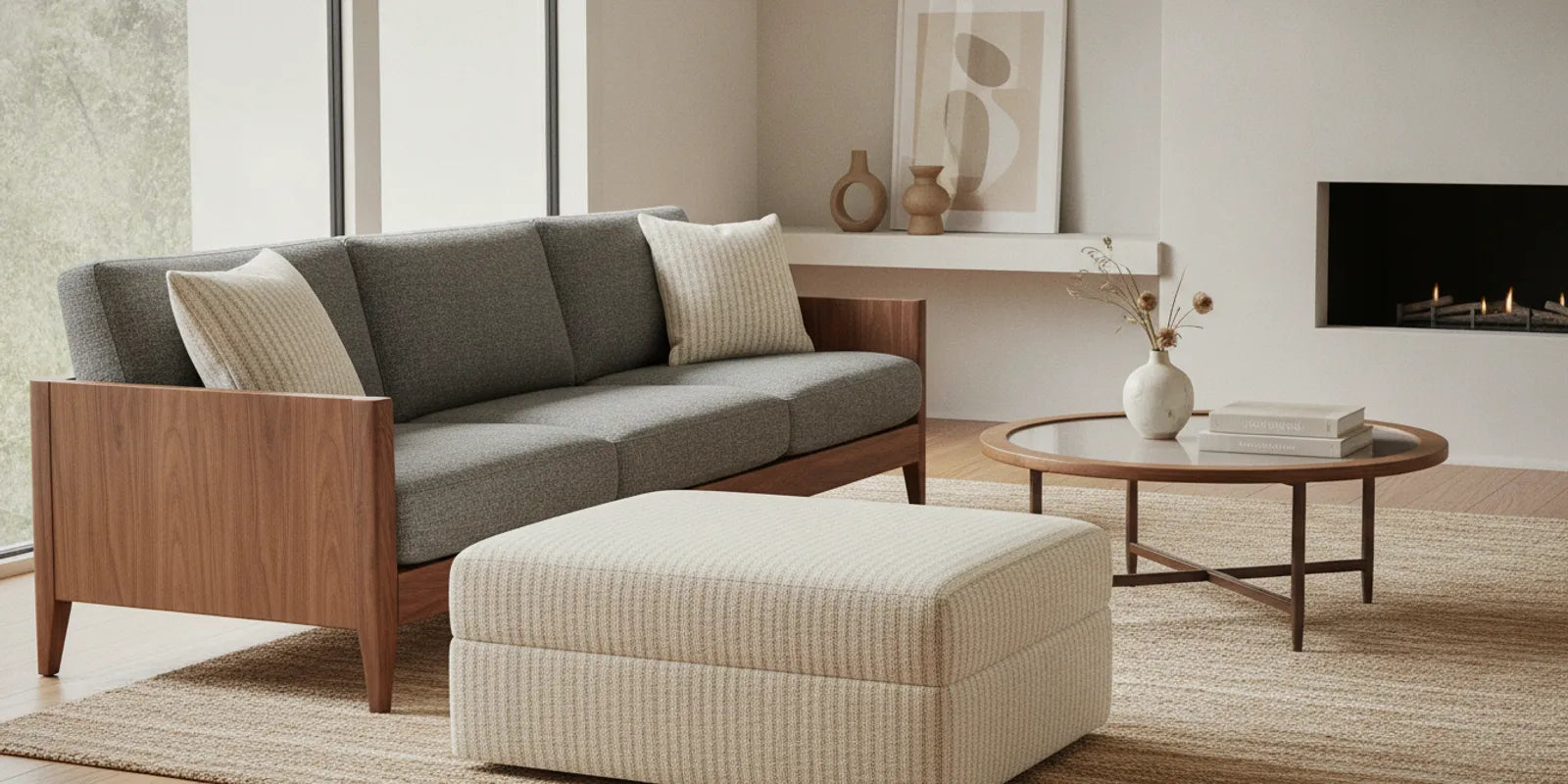

Ottoman furniture can provide a place to rest your feet, an extra seat, or a soft surface within reach of a sofa. The right choice depends on how you want it to work in your room, how much clear floor space you have, and whether the shape and upholstery complement the other pieces around it.
An ottoman is a low piece of furniture, often upholstered, with a cushioned top. Its role can change with the room and the way you arrange it. Some ottomans are compact and function like a footrest; others are broad enough to act as a central surface or occasional seat. A model with a firm, level top may work differently from a deeply padded one, so consider the intended task before focusing on appearance.
In a living room, an ottoman commonly serves one or more of these functions:
These roles can overlap, but not every ottoman is suited to every job. A soft, rounded footrest may feel inviting but be less practical as a stable surface. A firm ottoman with a tray may support everyday objects, yet feel less comfortable underfoot. Start with the main task, then decide whether a second function is genuinely useful.
The terms are sometimes applied loosely, and product naming varies. In general, a footstool is a small, simple support for your feet. An ottoman tends to be larger or more versatile, with a top that may be upholstered, firm, or designed to pair with a tray. A pouf is often a soft, compact cushion-like piece without a rigid frame.
These are useful distinctions, not strict rules. Compare dimensions, top firmness, construction, and care instructions rather than relying on the product name alone. If you are considering an ottoman alongside other living room furniture, think about how its height and footprint relate to the sofa and chairs already in the room.
Measure the space before deciding on a silhouette. Mark the intended footprint with painter's tape, a newspaper outline, or a similar temporary guide. Then walk around it as you would on an ordinary day. This simple test can reveal whether the ottoman blocks a route, crowds the sofa, or leaves enough space for a tray to be reached comfortably.
Measure the width and depth of the available area, including the distance between the seating and any doorways, drawers, or circulation paths. Consider how people move through the room, not just how the furniture looks in a still arrangement. An ottoman that fits on paper may feel oversized if it sits in the main route between the sofa and the rest of the home.
For a compact room, a small square or round shape can be easier to navigate around than a long rectangle. In a larger seating group, a rectangular ottoman can relate to a sofa's longer lines and provide a broad shared surface. A pair of smaller pieces may be moved as needed, though separate pieces can look less unified and require more floor area around them.
Compare the ottoman's top height with the seat height of the chair or sofa it will serve. For a footrest, a top around seat height or slightly lower often feels natural; a piece that sits much higher can feel awkward. Personal comfort and the furniture's proportions matter, so check the actual measurements rather than assuming that similar-looking pieces have matching heights.
If you expect the ottoman to function as a surface, consider whether its height will make a tray easy to reach from the sofa. A very low ottoman may be comfortable for feet but inconvenient for setting down a book. A higher top may be easier to reach but less suited to stretching out. There is no single correct measurement for every body or room.
For another perspective on scale and placement, compare an ottoman's footprint with a coffee table or end table in the same room. Those pieces have different functions, but measuring them against the same walkway and seating dimensions can clarify how much space the center of the room can comfortably hold.
The top is where comfort and practicality meet. A padded surface prioritizes softness and can serve as a footrest or occasional seat, depending on the product's construction. A firmer, flatter top may be more convenient when paired with a tray. A tray can make a soft surface more useful, but it does not turn every ottoman into a table: check that the tray sits securely and is large enough for what you plan to place on it.
Think through a normal day. Will the ottoman mostly stay in front of one seat? Will someone stretch out on the sofa and rest their feet on it? Do you want to move it to make room for guests? Will you place books, a remote, or a drink on it? These answers help prioritize firmness, shape, weight, and surface area. If you need a consistently stable place for several objects, compare the ottoman with a conventional table rather than expecting one piece to do everything equally well.
Ottomans invite contact: people rest their feet on them, shift them across a rug, and sometimes sit on them. Choose materials with the room's routines in mind. Consider how often the piece will be touched, whether it is near a window, whether pets or children share the space, and how much care you are prepared to give it.
Fabric can add softness, color, and texture. Look at the material description and care guidance for the specific item. Ask whether routine cleaning is appropriate, what to do about spills, and whether the fabric's texture or color is likely to work with your existing upholstery. A swatch, when available, can help you compare the color in your room's light. Screen images may not show texture or hue exactly as they appear in person.
Leather or other smooth upholstery can create a different visual effect and may be easier to wipe in some situations, but care needs vary by material and finish. Follow the maker's instructions rather than applying a generic cleaner. If the ottoman has exposed wood or another hard surface, check how that finish should be protected from abrasion, heat, and moisture.
Pattern and color affect how prominent the piece feels. A neutral fabric can sit quietly beside a patterned rug, while a richer tone or visible texture can make the ottoman a focal point. Look at the whole seating group, including the sofa, chairs, rug, and nearby tables. Aim for a relationship among these materials rather than an exact match across every surface.
Related products

Give an empty corner a welcoming seat with the Greta Upholstered Bench.
View product
An ottoman can echo the lines of the room or introduce a gentle contrast. In a mid-century modern setting, look at the proportions and visible materials of the surrounding pieces. A clean silhouette and carefully considered details can sit comfortably beside wood furniture without requiring every piece to match. The aim is a coherent room, not a set in which every surface has the same finish.
Compare the ottoman's visual weight with nearby furniture. A broad, fully upholstered piece may feel substantial beside a slim-legged chair; a compact ottoman may look more at ease in a smaller arrangement. Wood legs or a visible base can connect the piece to a table or chair frame, while a fully covered base can create a softer, more continuous shape. These are visual choices, but they also affect how clearly the ottoman's outline reads against a rug or floor.
Construction is just as important as the silhouette. Look for a product description that explains the frame, cushioning, upholstery, and intended function. If the details are not clear, ask the seller before ordering rather than assuming that a particular appearance indicates a certain structure. For an ottoman that will move between rooms, consider its weight and how easily you can grip and lift it. For a stationary piece, stability and a well-proportioned relationship to the seat may matter more.
Finishes and materials should make sense beside the other furniture, but exact matching is not essential. Natural wood has variation, and upholstery can look different under different light. Instead of trying to make the ottoman identical to a sofa or table, pick up a color, texture, or line that already appears somewhere in the room. This approach lets each piece retain its own character while still contributing to a considered arrangement.
In a living room, begin by aligning the ottoman with the primary sofa or chair. Keep enough room for people to sit down, stand up, and pass through without turning sideways. Leave a comfortable reach from the seat to the ottoman if it will serve as a footrest or tray surface. The ideal gap depends on the size of the furniture and the people using it, so test it in the room instead of relying on a universal rule.
In a smaller seating area, place the ottoman where it can perform its main task without interrupting the route to a door or another seat. A round or compact piece can help preserve a sense of movement, while a rectangular piece can define a conversation area. If a rug anchors the furniture, check that the ottoman sits steadily on it and does not catch or bunch the edge.
Near an accent chair, an ottoman can extend the chair's comfort. Compare the two pieces' scale and visual weight so one does not overwhelm the other. If you are furnishing a flexible seating group, review the proportions of mid-century arm chairs and sofas alongside the ottoman dimensions. The goal is a group that feels balanced and remains easy to move through.
In a bedroom, an ottoman at the foot of the bed can add a place to sit while dressing, but only if it does not restrict access or crowd the bed. In a reading nook, place it within comfortable reach of the chair and leave a clear route around it. A piece that migrates between rooms should be light and manageable enough for that routine; check its dimensions and construction before assuming it will be easy to reposition.
An ottoman is not automatically a replacement for a coffee table, bench, or accent chair. Compare what each option makes easier and what it asks you to give up. This quick guide can help you narrow the choice before looking at individual designs.
| Option | Best suited to | Consider before choosing |
|---|---|---|
| Padded ottoman | Footrest, soft visual element, or occasional seat when construction permits | May need a tray for a stable surface; confirm the top height and care instructions |
| Ottoman with a tray | A flexible soft surface that can hold a few everyday objects | Check tray fit and stability; the tray may need to be removed for feet or seating |
| Coffee table | A defined, consistently firm surface near the seating | Hard edges and fixed placement may affect movement and comfort |
| Bench | Longer seating or a slim surface along a wall or bed | Check seat height, length, and whether the room has clearance for its full footprint |
| Accent chair | A separate place to sit and a stronger addition to the seating plan | Requires more floor area and should be positioned to support conversation or reading |
If a firm surface is the priority, a table may be the more straightforward choice. If comfort, flexible positioning, and a softer profile matter more, an ottoman may suit the room better. A bench or chair answers a different seating need. Browse the ottoman collection alongside other seating, and compare the dimensions and construction details listed for each product.
Before making a decision, work through a short checklist. It helps separate a piece that simply looks appealing from one that fits your space and routines.
For product or order questions, use Gingko's how-to-buy and contact information. You can also review the furniture FAQs for general shopping details. Product specifications, care directions, shipping terms, and availability can change, so rely on the current listing and policies when checking a specific piece.
It can, if its size and top suit the way you live. A tray can provide a firmer place for a drink or small objects, but an upholstered top without a tray may not offer the stable surface you expect from a table. Compare both options in your room and decide which function matters most.
Some ottomans are designed to serve as occasional seats, while others are intended primarily as footrests or soft surfaces. Check the specific product description and maker's guidance before using one as a seat. Do not infer seating suitability from appearance alone.
There is no single gap that fits every room. Leave enough space to move comfortably and reach the ottoman without stretching, while preserving a clear path through the room. Use a temporary floor outline and adjust it until the arrangement feels natural in daily movement.
Not necessarily. Matching upholstery creates a coordinated look, while a complementary texture, tone, or shape can add contrast. Consider the room as a whole and repeat at least one material, color, or line elsewhere so the ottoman feels connected to the arrangement.
Explore ways to connect with Gingko
The most suitable ottoman is the one that fits the room, supports the task you care about, and feels at home with the furniture around it. Measure first, compare construction and care details, and choose a shape and surface that make everyday living more comfortable.
