

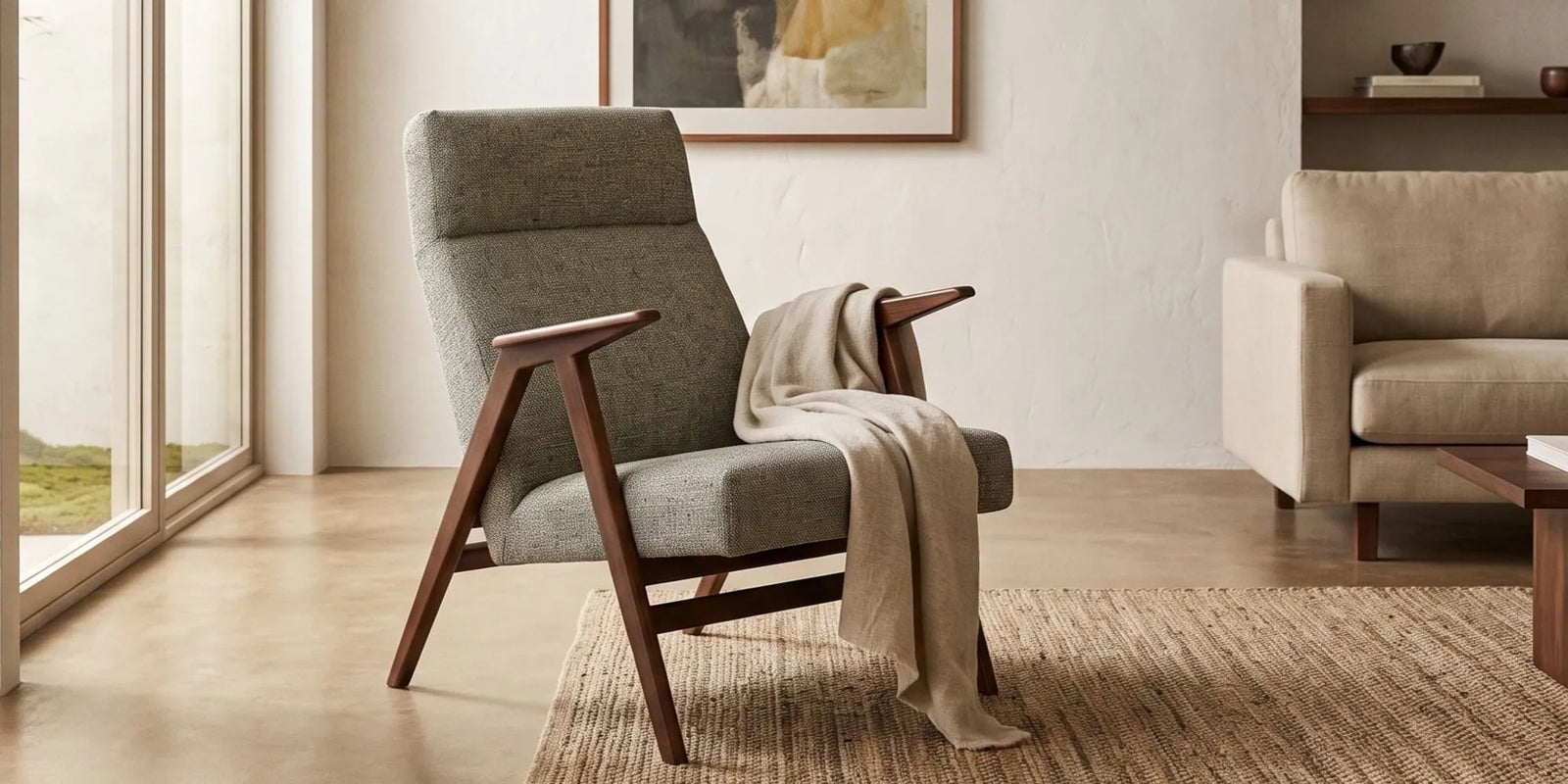

Knowing how to buy an accent chair means looking beyond a striking silhouette. The right chair should suit the room's scale, feel comfortable for the way you plan to use it, and fit the materials and style already around it. This guide walks through those decisions in a practical order. For more help comparing furniture for your home, explore our Furniture Buying Guide: How to Choose Pieces That Last.
Browse Gingko's accent chair collection to compare current styles, materials, and dimensions.
An accent chair is a standalone chair that adds seating and helps shape a room. It may complement a sofa, create a reading spot, or make an unused corner feel intentional. "Accent" describes its role in the room. It does not mean the chair should be chosen for appearance alone.
Start by deciding what you need it to do. A chair used for conversation should let people sit comfortably facing one another. A reading chair needs enough support for a longer stretch of sitting and a nearby place for a book or drink. A chair placed in a bedroom or entry area may be used briefly, so its footprint and visual presence may matter more than deep lounging comfort.
Think about how often the chair will be used, who will sit in it, and whether it needs to work with other furniture. If it will be a regular seat, prioritize supportive proportions and durable materials. If it is mostly there to balance the room, consider how its outline, frame, and upholstery contribute to the overall composition. In either case, comfort and appearance should work together.
Before browsing, note the room, the chair's intended job, and the approximate space available. Browsing a focused accent chair collection is easier when you already know whether you want a compact occasional seat, an upright conversation chair, or a more relaxed place to read.
Size is about more than whether a chair fits through the door. A chair can fit on the floor plan and still overwhelm a small room, block a walkway, or look too slight beside a substantial sofa. Measure the available area and consider the chair's full footprint, including arms and any visible rear or side projection.
Mark the proposed chair footprint on the floor with painter's tape or a temporary outline. Include space for someone to sit down, stand up, and pass around the chair. Check nearby doors, drawers, windows, and paths between rooms. In a conversation area, leave enough room for people to move naturally rather than squeezing the chair against a table or sofa.
Measure the route the chair must travel, too. Record doorway width and height, tight hallway turns, stairs, and elevator openings where relevant. A chair that fits in its final position may still be difficult to bring into the room if the approach is narrow or sharply angled. Check the product's overall dimensions and delivery information before deciding.
Look at the seat height, back height, and arm height in relation to nearby pieces. A seat that sits much higher or lower than the sofa may feel disconnected when people talk together. Arms that are too high can interfere with a side table; a tall back can interrupt a low, open sightline. These are not rigid rules, but they are useful cues when comparing options.
Use measurements rather than product photos alone. A photograph's camera angle can make a chair appear narrower, deeper, or lower than it is. If dimensions are listed, compare them with a chair you already own or make a simple cardboard outline. For a room with several seating pieces, browse the broader living room furniture collection to consider how a chair may sit alongside other shapes and proportions.
When dimensions are close, think about visual weight as well as inches. An open frame or visible legs can make a chair feel lighter in a room than a fully upholstered shape with a broad base. Even when their footprints are similar.
For a broader furniture-buying framework, see the Furniture Buying Guide: How to Choose Pieces That Last, then apply its room-scale and construction principles to your chair shortlist.
The frame affects a chair's appearance, feel, and relationship to other furniture. The best choice depends on the room and how you want the chair to function. Construction quality, joinery, and the specific product matter as much as the broad material category, so compare the details rather than relying on a label alone.
| Frame material | What it can contribute | Consider before choosing |
|---|---|---|
| Solid wood | Visible grain, warmth, and a substantial furniture presence; can pair naturally with wood tables and case goods. | Wood character varies. Check the product's construction and finish, and consider how its tone works with existing pieces. |
| Metal | A crisp outline and a more industrial or streamlined impression; slender components can keep the design visually open. | Look at the frame's finish and contact points, and decide whether its temperature and style suit the room. |
| Plastic or molded materials | A smooth, often visually simple shape that can introduce a different texture or color. | Check the product's support, feel, and construction details in person or through reliable product information. |
Wood frames bring natural variation and warmth to a seating area. Grain and tone give each piece visual character, while a visible wood frame can connect the chair to a side table, coffee table, or shelving. If you prefer furniture with clean lines and natural materials. Compare the chair's wood tone and finish with the pieces already in the room rather than expecting an exact match.
Ask what parts of the chair are solid wood and how the frame is joined. "Wood" by itself does not tell you whether a frame is solid throughout or how its components are connected. For a brand-specific description, rely on the details given for that individual product. Gingko's background and design approach are outlined on the About Gingko page.
Metal can bring a spare, precise quality to a chair, and molded materials can create smooth, continuous shapes. Either may suit a room where you want a contrast with wood furniture. Evaluate the full chair, not just the frame: upholstery, seat shape, finish, and leg profile all affect how it will look and feel.
Do not assume that one material is automatically sturdier or more comfortable than another. Examine the specific construction information, the support offered, and any care guidance. If you cannot try the chair before ordering, look for clear dimensions and product details. And ask the retailer a direct question about anything important that is not explained.
Compare Gingko accent chairs by shape, material, and dimensions.
Upholstery changes the chair's texture, color, and day-to-day care. The best option is the one that suits the room and the people who will use it. Ask for product-specific fabric or leather details, including care instructions. Names such as "velvet" or "boucle" describe a broad look or texture, not a guarantee of a particular performance level.
| Upholstery | Look and feel | Questions to ask |
|---|---|---|
| Woven fabric | Ranges from smooth and tailored to visibly textured; offers many color and pattern possibilities. | What is the specific fabric, and what cleaning method does its care guidance recommend? |
| Leather | A distinct surface with a clean, often tailored appearance that can complement wood frames. | What kind of leather is specified, how may it change with use, and how should it be cared for? |
| Boucle or nubby texture | Textural surface that can soften the lines of a wood or metal frame. | How does the fabric feel in person, and what maintenance does the manufacturer advise? |
| Velvet | A plush surface with a directional pile and a more dressed-up visual effect. | How does the particular fabric respond to everyday contact, and what care is appropriate? |
For households with children, pets, or frequent guests, think about how the chair will be used and what kinds of marks or wear concern you. Ask about cleaning instructions before purchase rather than assuming a fabric is stain-resistant or easy to clean. If leather is on your list, browse the leather furniture collection and review the details for each piece.
Color deserves the same careful look. A chair can be a quiet extension of the room or a deliberate focal point. Compare fabric and wood tones in the light where the chair will sit, and consider whether nearby rugs, curtains, and artwork have warm or cool undertones. If a swatch is available, view it at different times of day; screens can display colors differently from the physical material.
Choose a shape that relates to the room without making every piece match. Mid-century modern interiors often pair clean lines, visible wood, and balanced proportions, but a room does not need to be tied to one period. A chair with a curved back can soften a room of straight-edged furniture. A crisp, angular frame can bring definition to a softer arrangement.
Look at the silhouette from more than one angle. In an open-plan room, the back of the chair may be visible as often as the front. A low profile can preserve sightlines; a taller back can give a reading corner more presence. If the room already contains patterned textiles or strong artwork, a simpler chair shape may help the composition feel settled. If the room is mostly quiet in color and form, upholstery texture or a distinctive outline can add interest.
Consider the other materials in view. A wood-framed chair can echo a side table without requiring the tones to be identical. A metal frame may pick up hardware or lighting details. Upholstery can repeat a color from a rug or add a new note. For more options across chair shapes and materials, explore Gingko's chair collection.
Finally, think about the chair as part of a seating group. A chair should support conversation rather than turn away from it, unless you are intentionally creating a separate reading spot. Check whether a side table can sit within reach and whether a lamp provides useful light. Small placement decisions can make a distinctive chair feel like a natural part of the room.
Related products

A few focused questions can reveal whether a chair is right for your space and expectations. Product information varies. So confirm details for the exact chair you are considering instead of assuming that every piece in a collection has the same construction, materials, or terms.
When buying online, clear answers matter. Read the product page carefully, and contact the retailer if measurements or material descriptions are missing. Gingko's frequently asked questions and how-to-buy information are useful starting points for general questions; confirm any product-specific detail against the chair's current listing.
Placement changes how a chair functions and how its shape reads. In a conversation area, angle the chair toward the sofa or other seats so the group feels connected. It does not need to sit perfectly square with the walls. A slight turn can open the seating arrangement and make the chair easier to approach. Keep a clear path around the group, especially between the entry, sofa, and other frequently used areas.
For a reading corner, position the chair where the light is comfortable and leave room for a lamp or small table if you need one. Check that the chair can be used without moving another piece every time. A chair beside a window may be inviting, but leave enough clearance for curtains, blinds, and access to the window. If the chair is near a sofa, compare their seat heights and visual scale so one piece does not appear awkwardly oversized next to the other.
It can help to test the arrangement before ordering. Use painter's tape to outline the footprint, then place a temporary stool or box at approximately the seat height. Walk around the outline and sit in nearby seats to see whether the arrangement feels natural. This simple check will not reproduce the chair's comfort, but it can expose tight pathways or a layout that makes conversation difficult.
Think about the view from the rest of the room, too. An accent chair can create a focal point, but it should not obstruct a doorway or dominate a compact space. Balance its outline with nearby tables, lamps, and storage. If it will sit beside a coffee table, compare the table's height and distance with the chair's arm and seat. And make sure the arrangement leaves enough room to reach the table comfortably.
Compare a short list using the same criteria: room fit, comfort for your main use. Frame and upholstery details, care needs, and how the silhouette works with your existing furniture. If one chair looks compelling but its dimensions or materials remain unclear, pause and get those details before you buy. A beautiful chair should also make sense in the room where it will live.
There is no single best accent chair for every home. The best choice is a well-considered fit for your available space, daily routines, and design preferences. Take measurements, look closely at product-specific details, and give yourself time to picture the chair from every side in its intended setting.
Compare current accent chair options, then use Gingko's how-to-buy information for product questions before ordering.
With a clear plan for scale, comfort, construction, and care. You can choose an accent chair that feels at home in your room and serves you well in everyday life.
Start with the chair's job: reading, conversation, occasional seating, or a visual counterpoint to a sofa. Measure the available area, including nearby windows, alcoves, doorways, and existing furniture, then compare those measurements with the product dimensions. A simple floor plan or painter's-tape outline can make the chair's footprint easier to judge before you order. Finish by considering proportion, seat comfort, and how the frame, wood tone, and upholstery relate to the rest of the room.
Place it where it supports the room's natural activity without blocking circulation. A chair can complete a conversation grouping beside a sofa, define a reading corner near useful light, or fill an open area in a living room. Leave enough working space for people to sit, stand, and move around it comfortably. Check the path from the entryway to the chair as well as the route through the room, not just the final arrangement from one viewpoint.
Choose materials based on how the chair will be used and how much care you are willing to provide. Ask how the upholstery is expected to age and how it should be cleaned, then consider household activity, sunlight, pets, and children. For a lasting design, look at the frame, joinery, finish, and upholstery together rather than selecting fabric or leather by color alone. Natural walnut character can add warmth, while the upholstery determines much of the chair's tactile feel.
Buy from a retailer that clearly presents product dimensions, materials, care guidance, current availability, and the applicable delivery and return information. Online shopping can work well when those details are easy to review and the brand explains how to get purchase questions answered. Before checking out, compare the chair with your measurements and intended use, then review the current information on Gingko Furniture's accent chair collection and how-to-buy page.
Choosing an accent chair becomes easier when you have a clear sense of your room, daily use, and preferred materials. Browse Gingko Furniture's accent-chair collection for designs that bring thoughtful proportion and functional beauty into everyday spaces. For product questions or help with the next step, contact us through the current how-to-buy page.