

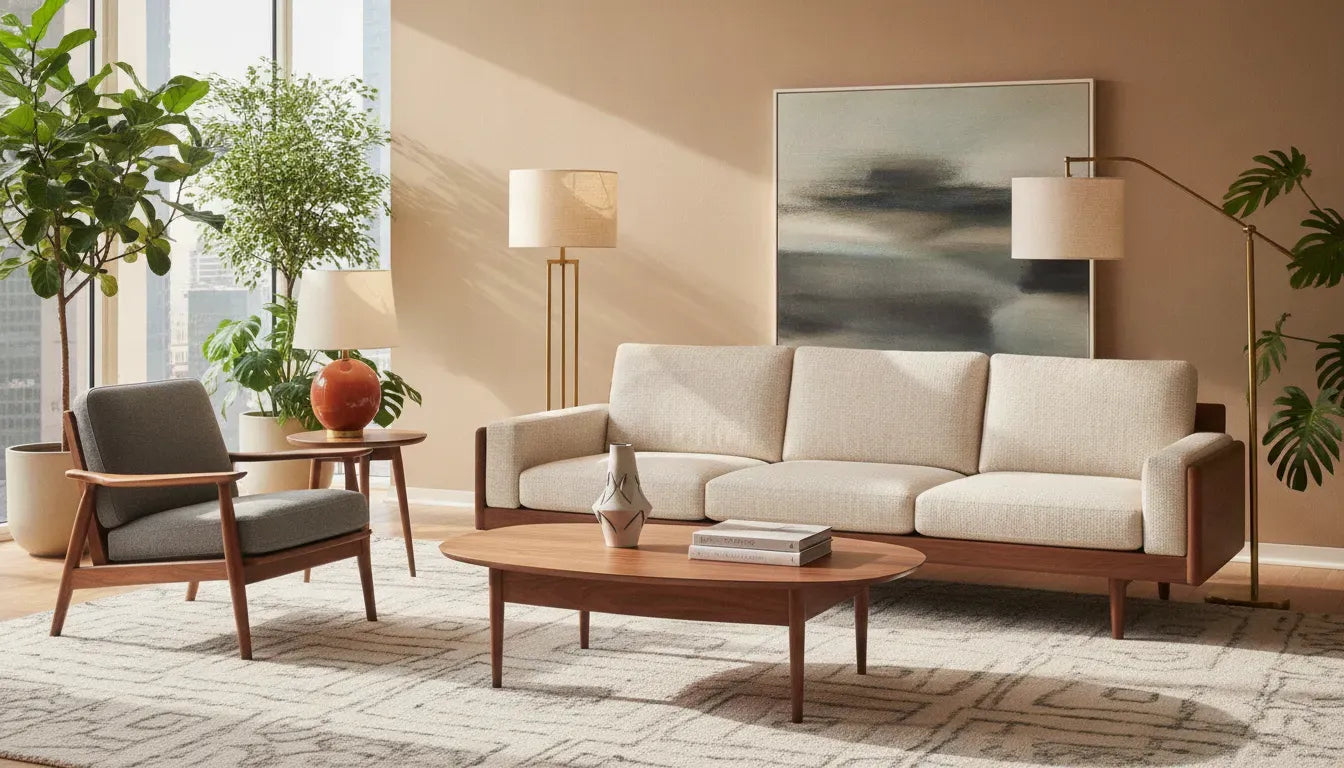

A successful mid-century modern living room is less about collecting period-looking pieces and more about making proportion, circulation, and material work together. Start with the room's real demands: where people sit, how they move through the space, and which surfaces need to support daily life. Clean lines and visually light forms can make even a compact room feel considered rather than crowded.
The most useful mid century modern living room ideas combine human-scaled furniture, warm wood, functional lighting, and a restrained palette, then arrange each piece around conversation and clear walkways.
From choosing an anchor sofa to balancing walnut with upholstery, every decision should serve both the look and the way you live. The principles of simplicity, function, and connection to nature provide a helpful starting point, but the room becomes successful through practical choices about scale and placement.
Begin by defining the visual and functional building blocks that give the style its coherence.
A successful mid-century modern living room is less about collecting recognizable shapes and more about making several decisions support one another. Clean lines establish visual calm, while human-scaled proportions keep the room comfortable rather than formal. Natural materials add warmth and variation, and a restrained palette lets the furniture's silhouettes and wood grain remain visible.
Start with the room's function. Identify the primary conversation area, the path people use to enter and move through the space, and the surfaces needed for everyday activities. A sofa, accent chair, coffee table, and storage piece can create a complete arrangement when their dimensions leave enough breathing room. Measure clearances and compare them with each product's published dimensions before committing to a layout. This practical step matters as much in a compact apartment as it does in a larger home.
For a broader explanation of the style's history and values, see these mid-century modern design principles. In the living room, translate those principles into choices that feel useful every day.
| Element | What it contributes | Practical check |
|---|---|---|
| Clean-lined forms | Creates a calm, edited appearance and gives each piece room to be appreciated. | Look for clear silhouettes without unnecessary ornament, then avoid filling every open surface. |
| Human scale | Keeps seating approachable and helps the arrangement work in contemporary homes, including smaller spaces. | Check seat height, overall depth, and walking paths against the room and the people who use it. |
| Natural materials | Adds tactile warmth and subtle variation, especially through distinctive walnut grain. | Balance wood with upholstery, woven textiles, or another soft surface rather than repeating one finish everywhere. |
| Restrained palette | Supports simplicity while allowing a few accents to provide character. | Choose a base of warm neutrals or muted colors, then repeat one or two accent tones with intention. |
| Functional layout | Connects the room's visual order to conversation, lounging, reading, and storage. | Place the coffee table within comfortable reach, preserve circulation, and make storage accessible. |
Think of these elements as a system, not a checklist. A visually light sofa can balance a substantial walnut table; a quiet wall color can make sculptural seating more noticeable. The goal is a room with enough structure to feel composed and enough flexibility to support real life.
A sofa is usually the largest upholstered piece in the room, so its proportions set the direction for everything around it. In a mid-century modern living room, the best anchor feels intentional without becoming visually heavy. Clean lines, a raised or visually light base, and a disciplined relationship between upholstery and wood can establish the look while keeping the room comfortable for everyday use.
Begin with the wall, but do not stop there. Measure the available length and depth, then check doorways, hallways, stair turns, and any tight corners the sofa must pass through. Compare those clearances with the dimensions and specifications listed on the product page. Leave enough space for doors, windows, vents, and the natural path between the sofa and nearby seating. Human-scaled furniture can work especially well in apartments and smaller homes, but only when the clearances are deliberate.
Look for a profile that supports the room rather than closing it in. Tapered legs, a defined frame, and a moderate seat depth can keep a substantial sofa from reading as a solid block. Low, clean-lined forms generally suit the MCM vocabulary, but comfort still matters. Consider how you sit, whether you lounge, and whether the sofa needs to accommodate guests before prioritizing a particular outline. The goal is functional beauty, not a museum-like pose.
Choose upholstery that works with the room's light and existing finishes. A calm neutral can give walnut furniture room to speak, while a deeper or warmer fabric can create a more intimate setting. Upholstery options and availability are product-specific, so confirm the current choices before planning the rest of the palette. Avoid selecting fabric in isolation. Place a sample or photograph beside the floor, wall color, rug, and natural light you already have.
Mid-century modern design benefits from contrast between soft upholstery and warm wood grain. A walnut frame, table, or nearby storage piece can connect the sofa to the rest of the room without requiring a perfectly matched set. Gingko's Zach mid-century walnut sofa is one example to evaluate alongside the room's existing materials. Keep the balance measured: repeat the wood tone in one or two supporting pieces, then use a rug, woven texture, or greenery to soften the composition.
Use painter's tape or cardboard to mark the sofa's footprint on the floor. Walk the main routes, pull out drawers or cabinet doors nearby, and check that a coffee table will not make the seating area feel cramped. If you are comparing options, browse Gingko's mid-century living room furniture with the room measurements beside you. A sofa anchors the design best when it makes the room easier to use, not merely more recognizable as MCM.
Accent chairs can make a living room feel more conversational without adding the visual weight of another sofa. The right number depends on the room's scale, the seating you already have, and how people move through the space. In a larger room, two chairs often create a balanced arrangement across from a sofa or at a right angle to it. They establish a clear conversation area while allowing each person to face the center of the room rather than the television alone.
One chair is often the better choice when the room is narrow, the sofa already provides generous seating, or a single reading position would be useful. Place it near the end of the sofa, angled slightly toward the coffee table and the other seats. That small turn matters: a chair aimed into the room invites conversation, while one pushed flat against a wall can feel disconnected. Leave a comfortable path between the chair and nearby tables, doorways, and the primary route across the room.
Start by mapping the room's main movement before choosing a position. Keep chair legs and ottomans out of door swings and avoid narrowing the route between the sofa and an entrance. Product pages provide dimensions and specifications, so compare those measurements with the available floor area, including the clearance needed to sit down and stand up. A visually light, human-scaled chair can support the clean lines of a mid-century modern room without making the seating group feel crowded.
With two chairs, try placing them opposite the sofa or flanking a small table. Opposite placement works well when the room is wide enough for a central table and an unobstructed passage behind the chairs. Flanking placement can frame a fireplace, window, or media unit, but do not force symmetry if it blocks natural light or makes the room feel tight. The goal is a usable conversation zone, not a showroom diagram.
In an apartment or compact living room, choose one chair with a clear purpose and keep the surrounding composition restrained. A chair with a simple silhouette can add contrast without competing with the sofa's footprint. If two chairs are essential, use narrower forms and place them at opposing corners rather than lining every wall with furniture. Keep upholstery and wood tones connected to the rest of the room, while allowing the chair's shape to provide a modest point of interest.
Explore Gingko's mid-century modern accent chairs for options suited to this kind of layout. For a single lounge position, the Zach mid-century lounge chair is a useful product to consider alongside the room's dimensions and existing furniture. Confirm current specifications on the product page before finalizing the arrangement.
Related products


A coffee table should connect the seating group without making the room feel crowded. In a mid-century modern living room, that usually means choosing a form with a clear silhouette, a material that supports the room's palette, and a scale that leaves comfortable paths around the furniture. Start with circulation: mark the footprint of the sofa and chairs, then check whether people can move naturally between the seating, the table, and nearby doors or storage. The right table is not simply the largest surface that fits. It gives the room somewhere to gather while preserving the visual lightness that makes MCM furniture feel human-scaled.
Shape is especially useful when it responds to the geometry of the seating. A rectangular table can echo a long sofa, while a round or curved design softens a room built from strong linear forms. Surfboard-shaped tables offer some of that softness while retaining useful length. Nesting tables can provide flexible surfaces without committing the full footprint of a larger table all the time.
| Shape or approach | Best for | Watch for |
|---|---|---|
| Round | Conversation areas with chairs arranged around a central point, and rooms where softened edges improve movement. | Its footprint may offer less dedicated linear surface beside a long sofa. Check that the diameter does not crowd the walking route. |
| Rectangular | Long sofas, larger seating groups, and layouts that need a broad, orderly surface. | Sharp corners and excessive length can interrupt circulation, especially in compact rooms. |
| Surfboard | Rooms that need the usable length of a substantial table with a more fluid, sculptural outline. | Curved ends still require clearance. Judge the complete footprint rather than measuring only its center span. |
| Nesting | Flexible rooms, smaller spaces, or households that want to separate surfaces when guests arrive. | Separate pieces can drift into circulation paths. Decide where the tables will live when they are not nested. |
Material should relate to the rest of the room without turning every piece into a matching set. Warm walnut can reinforce the natural character and functional beauty associated with mid-century modern design, while a contrasting top or upholstered seating can keep the composition from feeling too uniform. Gingko's catalog includes round, surfboard-shaped, nesting, and live-edge designs, but materials vary by product, so review the individual specifications before making a selection. Explore the collection of walnut coffee tables with your room's existing wood tones in mind.
Finally, compare the table's height with the sofa and chairs rather than relying on a universal rule. A surface that sits comfortably within reach should feel intentional beside the seat, not noticeably towering or sunken. Check the listed dimensions, measure your available clearances, and use painter's tape or cardboard to test the footprint before ordering. That small planning step helps the table support the room's rhythm instead of competing with it.
Walnut can do more than fill a room with useful surfaces. Its warm color and distinctive grain act as a natural focal point, bringing visual depth to the clean lines of a mid-century modern interior. Let one or two substantial walnut pieces establish the room's character, then give them enough space to be noticed. A console, coffee table, media cabinet, or shelving unit can anchor the composition without making every surface feel visually heavy.
The best mid century modern living room ideas balance walnut with contrasting materials. Upholstered seating softens the look and makes the room feel comfortable rather than overly formal. On some seating styles, Gingko offers multiple fabric color options, so treat upholstery as a way to introduce a quieter neutral or a carefully chosen accent color. Metal can add a fine, structural line through a lamp base or chair frame, while glass keeps a tabletop or display area visually light. These details complement walnut without competing with its grain.
A room can feel more considered when the wood tones relate without matching perfectly. Pair a walnut coffee table with upholstered seating and a lighter rug, or place a walnut console against a wall with artwork and open space around it. Repeating the material in a few places creates cohesion; using it on every major surface can flatten the room into a showroom-like set. Varying height, texture, and silhouette is especially helpful in a smaller space, where visually light forms and human-scaled proportions can preserve a sense of openness.
Construction matters, but it should be evaluated piece by piece. Gingko presents its furniture as designed for lasting use, with solid walnut construction and traditional joinery in its broader product offering. That does not mean every item has identical joinery or specifications. Read the individual product page for the relevant materials, dimensions, and construction details before making a selection. Measuring clearances at the same time helps ensure a handsome piece remains practical for circulation and everyday use.
Storage should solve a real problem rather than simply occupy an empty wall. A media cabinet can organize equipment, a console can provide a landing place near the room's edge, and shelving can display books or objects while keeping essentials accessible. Think about what needs to be concealed, what deserves to remain visible, and how often you will reach for it. Explore walnut living-room storage with those questions in mind. For the broader principles behind the style, see the mid-century modern design guide.
The finishing layers should make the room feel considered without competing with its furniture. Begin with the light already available. Keep windows visually open where possible, use sheer treatments when privacy is needed, and arrange taller pieces so they do not block the brightest part of the room. Natural light brings out the warmth and distinctive grain of walnut while helping a compact space feel more open.
A rug gives the seating area a visual boundary and keeps a sofa and chairs from appearing like separate objects. Choose a size that allows at least the front legs of the main seating to rest on it, provided the room and clearance allow. A low-contrast pattern or quietly textured solid can support clean-lined furniture without adding visual noise. In a smaller living room, a rug that extends beyond the coffee table and reaches toward the seating can make the arrangement feel more unified rather than crowded.
One ceiling fixture rarely provides the right atmosphere for every use. Combine general light with a floor or table lamp near a reading chair, then add a smaller pool of light near storage or a console if the room needs it. Choose fixtures with simple profiles and warm, comfortable illumination. The goal is not to make every corner equally bright. It is to create several useful zones that can shift from conversation to reading to evening relaxation.
Accessories work best when they repeat the room's underlying language. A ceramic vessel, framed artwork, a woven textile, or a plant can introduce texture and personal character while keeping the palette calm. Let the walnut remain part of the decor rather than covering every surface. Group a few meaningful objects at different heights, leave some open space around them, and rotate pieces when the room starts to feel busy. For more practical guidance, explore these living room accents and decor.
These choices are especially useful in a small room, where every object has visual weight. Human-scaled furniture, a grounded rug, clear pathways, and selective accessories preserve the simplicity and connection to nature that make mid-century modern interiors feel livable. The result is not a staged collection of period references, but a room with enough warmth and personality to feel genuinely yours.
Start with a clear layout and one anchor piece, then layer in seating, a coffee table, lighting, and a few natural textures. Keep the palette restrained, let wood grain provide warmth, and choose pieces with clean lines and human-scaled proportions. Measure circulation paths before adding accessories so the room remains comfortable as well as composed.
Yes. Its emphasis on simplicity, functionality, natural materials, and balanced proportions continues to suit contemporary homes. The look feels current when you combine classic silhouettes with the way you live now, rather than recreating a period room or filling the space with overly themed decor.
The main elements are clean-lined furniture, functional layouts, warm wood, organic shapes, practical lighting, and a restrained mix of color and texture. You do not need every element in equal measure. A walnut table, a visually light sofa, and thoughtfully placed art can establish the character without making the room feel staged.
The 2/3 rule is a proportion guideline: an item should often relate to roughly two-thirds of the element beside it. For example, a coffee table may work best at about two-thirds the length of a sofa. Treat this as a starting point, then confirm clearances, walking paths, and the actual dimensions of each piece.
The right mix of proportion, comfort, and natural materials can make a mid-century modern living room feel both distinctive and easy to live in. Browse Gingko's mid-century living room furniture collection to explore thoughtfully proportioned sofas, chairs, tables, and storage, then choose the pieces that support how you use the room every day.
