

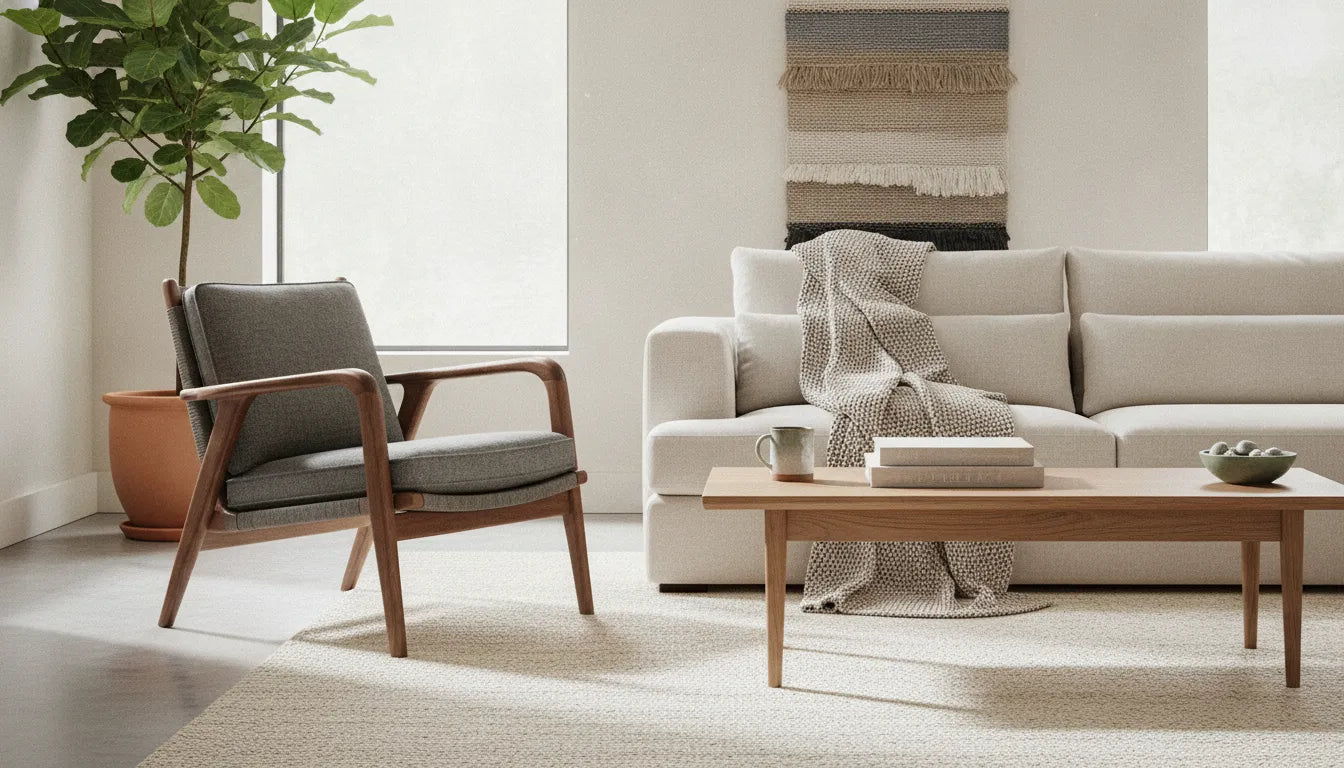

Choosing between two furniture styles is rarely as simple as picking a lighter or darker wood. Mid-century modern and Scandinavian design both value function, clean lines, and natural materials, yet they create different moods through proportion, shape, color, and visual weight.
Mid century modern vs scandinavian furniture is less a choice between opposites than a comparison of emphasis: mid-century modern often brings stronger geometry, low profiles, sculptural presence, and purposeful contrast, while Scandinavian furniture typically leans toward quieter forms, lighter visual weight, and restrained warmth. Either can create a comfortable, considered living room.
For Gingko shoppers, the most useful question is not which style is better. It is how each one supports the way you live, and which details will work with your existing room. Our guide to mid-century modern furniture offers more background on that design language. First, it helps to understand where these traditions overlap and where their histories and priorities begin to diverge.
Mid-century modern and Scandinavian furniture are related because both ask a similar question: how can a piece look refined while making everyday life easier? Each style values function, clean lines, thoughtful proportions, and natural materials. That shared foundation is why a Scandinavian lounge chair can sit comfortably beside a mid-century modern coffee table without looking disconnected. The relationship is real, but the styles are not interchangeable.
Scandinavian design is associated with the Nordic region, including Denmark, Finland, Norway, Sweden, and Iceland. Its modern development is often traced to the 1930s, with the style continuing to flourish through the 1950s and beyond. Designers in the region drew on simplicity and functionalism, including ideas associated with the Bauhaus, while developing a distinct response to local materials, craftsmanship, light, and daily use. The result is often a calm, light, and relaxed environment in which ornament is limited and every line has a reason.
Mid-century modern furniture developed in a different historical and cultural setting. The style emerged in the United States during the 1940s and 1950s, alongside postwar experimentation in materials, manufacturing, and the organization of the home. Its visual language can be more varied than the phrase minimalism suggests. A mid-century room may include low profiles, open interiors, geometric shapes, and natural wood. But it can also bring in sculptural curves, strong contrast, or a carefully chosen accent color. New materials and techniques, including molded plywood, fiberglass, and tubular steel, expanded what furniture could look like while keeping it useful.
That difference in context helps explain the difference in feeling. Scandinavian furniture often creates a quieter foundation through restrained forms and a lighter visual presence. Mid-century modern furniture can feel more architectural or expressive, with a stronger emphasis on silhouette and contrast. Neither description is an absolute rule. A Scandinavian piece may have a bold profile, and a mid-century room may be warm and understated. The distinction comes from the combination of form, material, scale, and palette rather than from one isolated feature.
For a living room, the overlap makes both styles practical starting points. Look for furniture that serves its purpose clearly, uses honest materials, and leaves enough visual space for the room to breathe. Then decide whether you want the overall effect to lean lighter and more restrained or more sculptural and graphic. Gingko's mid-century modern furniture follows that second tradition while adapting clean lines, functional beauty, and natural walnut grain for contemporary homes. Understanding the shared principles makes it easier to appreciate the distinctions that come next.
Both styles value useful furniture, clean lines, and thoughtful use of natural materials. That shared foundation can make them look interchangeable at first glance. The distinction becomes clearer when you consider the furniture's proportions, the way materials are allowed to speak, and the atmosphere you want your living room to create. Mid-century modern often feels more graphic and sculptural. Scandinavian furniture usually creates a lighter, quieter, and more relaxed setting.
These are tendencies rather than strict rules. A mid-century room can be restrained and pale, while a Scandinavian room can include dark wood or a dramatic accent. The goal is not to identify a piece by color alone. Look at the complete composition: silhouette, visual weight, finish, upholstery, and how the piece relates to the rest of the room.
| Design consideration | Mid-century modern | Scandinavian |
|---|---|---|
| Silhouette | Low profiles, tapered supports, geometric structure, and organic curves can sit together. Forms may have a distinct sculptural presence. | Clean-lined, simplified forms emphasize ease, proportion, and an uncluttered appearance. |
| Material expression | Natural wood can be paired with upholstery, molded forms, metal, or other materials to create contrast and visual interest. | Wood, textiles, and other natural-feeling materials are often presented with a quiet, tactile sense of warmth. |
| Palette | Neutral foundations may be joined by richer wood tones and carefully chosen accent colors. | Soft neutrals and light, calming tones commonly support the relaxed character, though darker woods are still possible. |
| Visual weight | Stronger geometry, contrast, or a dramatic chair or table can become a focal point. | A lighter visual footprint helps the room feel open, calm, and easy to live with. |
| Living-room effect | Creates a confident, architectural room with recognizable character and a sense of designed composition. | Creates a welcoming, restrained room where comfort, light, and everyday function take priority. |
Choose the mid-century direction when you want the living room to have a clear point of view. A low lounge chair with an expressive frame, a walnut table with defined geometry, or upholstery in a deliberate accent color can give the room structure without adding ornament. This approach works especially well when you enjoy arranging a few distinctive pieces and allowing each one to contribute to the room's identity.
The advantage is visual clarity and personality. The tradeoff is that strong silhouettes require more attention to scale and spacing. Too many focal pieces can make a smaller room feel busy, even when every item has clean lines. Keep surrounding elements quieter so the furniture can read as a composition rather than a collection of competing statements.
A Scandinavian direction may be the better fit when you want a living room to feel airy, gentle, and adaptable. Simplified forms and a controlled palette can make the room easier to layer with books, textiles, art, and personal objects. The tradeoff is that a very restrained room can feel flat if every surface has the same tone or every shape is equally understated. Add depth through natural texture, varied proportions, and one or two pieces with more presence.
For a deeper look at proportion, function, and recognizable forms, see these mid-century modern design features. Then judge each prospective piece by the atmosphere it creates in your actual living room, not by the label alone.
Related products


The best choice is less about assigning your home to a category and more about deciding how you want the room to feel and function. Start with the room itself. A living room with strong architectural details, generous daylight, or a more open layout can support the graphic presence of mid-century modern furniture. A smaller room, a space with limited natural light, or a home that already feels visually busy may benefit from the quieter foundation associated with Scandinavian design.
Mid-century modern pieces often bring more contrast and sculptural presence. A low profile, expressive leg, curved back, or geometric frame can give the room a clear focal point without requiring much decoration. This approach works well when you want the furniture to carry some of the room's personality. Balance stronger silhouettes with open space around them, especially in an apartment or compact living room. Too many statement forms can make a small floor plan feel crowded.
Scandinavian-inspired furniture generally creates a lighter, more restrained backdrop. Clean-lined forms and a relaxed visual rhythm can help a room feel open and calm. That does not mean every piece must be pale or delicate. The useful question is whether the proportions leave room for movement, conversation, and daylight. Measure the seating footprint, walking paths, and door clearances before choosing a style. Human-scaled furniture can feel more comfortable than an oversized piece, regardless of the label attached to it.
Look at how light changes through the day. In a dimmer room, a restrained palette and visually open base can keep the space from feeling heavy. In a bright room, warmer wood, deeper upholstery, or a more architectural silhouette can add definition. Mid-century modern styling can accommodate meaningful contrast and carefully chosen accent colors, while a Scandinavian direction often begins with neutrals and natural textures. Neither palette is a rule. Choose colors that support the walls, flooring, artwork, and pieces you already plan to keep.
Your routine matters just as much as your color board. If the living room is used for reading, select seating that supports longer periods of comfort and place a practical surface within reach. If it is the center of conversation, prioritize a layout that lets people face one another without blocking circulation. If children, pets, or frequent guests share the room, favor materials and silhouettes that are easy to live with rather than delicate details that require constant protection. The design should serve the way the room is actually used.
For a practical starting point, explore Gingko's mid-century modern accent chairs and compare their scale with your sofa and available floor space. A single chair can introduce stronger mid-century character to a quieter room, or add a defined reading spot without committing to a complete redesign.
Solid walnut can support either a mid-century modern room or a Scandinavian-inspired one, but the wood itself does not decide the style. Walnut brings warmth, visible grain, and a substantial natural presence. The surrounding design determines whether that presence reads as sculptural and architectural or quiet and restrained.
Start with the silhouette. A walnut piece with a low profile, tapered or angled legs, and a clear geometric outline will usually reinforce a mid-century modern direction. The form has enough visual definition to become part of the room's character. A simpler piece with softer proportions, minimal ornamentation, and a lighter overall effect can sit comfortably in a Scandinavian-influenced setting. These are useful tendencies, not fixed rules. The same material can move between styles when its shape and supporting details change.
Finish also affects how walnut participates in a space. A finish that keeps the grain easy to read preserves the material's natural expression. In a mid-century modern room, that warmth can work with stronger contrast, sculptural upholstery, or a more defined accent color. In a quieter room, the same walnut can be balanced with pale walls, understated textiles, and a restrained palette. The goal is not to make walnut look artificially light. It is to decide how much visual weight the wood should carry.
Upholstery provides another clear styling signal. A walnut frame paired with patterned or richly colored upholstery can give a living-room chair a more expressive mid-century presence. Neutral upholstery and an uncomplicated profile can create a calmer foundation, especially when the room already contains several textures. Product-specific upholstery materials and colors should always be confirmed before purchase, since not every chair or seating design uses the same construction.
Look at the other materials in the room before choosing accessories. Warm wood tones, natural textures, and a neutral foundation can help connect the two style directions without making them identical. If the room needs more energy, introduce contrast through a carefully chosen textile, artwork, or accent rather than adding competing focal points everywhere. If it feels visually heavy, leave more breathing room around the walnut and repeat its clean lines in nearby furniture.
For a closer look at what to evaluate beyond color, read Gingko's solid walnut furniture guide. It explains the difference between solid walnut construction and a walnut-colored surface, along with the role of joinery, wood movement, and finish in evaluating a piece. That material knowledge makes style decisions more useful: you are choosing a form and a lasting construction, not simply matching a brown tone.
Yes. The two styles share a practical foundation: both value clean lines, useful furniture, natural materials, and forms that support everyday living. That overlap makes them natural companions in a living room, but a successful mix still needs intention. If every piece speaks at the same visual volume, the room can feel less layered than undecided.
Start by choosing a dominant language. If mid-century modern is the anchor, let the room keep some architectural definition through a low, sculptural profile, tapered or angled legs, or a stronger contrast between wood and upholstery. Scandinavian pieces can then soften the composition with simpler silhouettes, lighter textures, and a quieter palette. If Scandinavian design leads, reverse the balance: establish a calm, restrained foundation, then use one or two mid-century pieces to add geometry, warmth, or a more pronounced focal point.
A shared wood tone is one of the easiest ways to connect pieces from different traditions. You do not need every finish to match exactly, but avoid assembling unrelated undertones without a visual bridge. Warm walnut can sit comfortably with other natural woods when the surrounding palette gives the grain room to register. A neutral rug, soft wall color, or restrained upholstery can keep the combination from becoming visually busy.
Next, repeat a line or shape. A curved chair back can relate to a rounded coffee table, while slim legs or a consistent horizontal profile can create rhythm across the seating area. Repetition does not mean buying a matching suite. It means giving the eye a pattern to follow. Pay equal attention to proportion. A substantial mid-century sofa may overwhelm a delicate Scandinavian side chair, while several small, visually light pieces may leave a large room feeling unfinished. Consider height, depth, and visual weight together before adding another accent.
Color deserves the same restraint. Begin with a controlled foundation of neutrals and natural tones, then introduce one considered accent color through upholstery, art, or a small accessory. Mid-century modern can accommodate stronger contrast, while Scandinavian rooms often benefit from a lighter, more relaxed range. The mix works best when color supports the chosen hierarchy rather than competing with it.
For a focused way to introduce the mid-century side of the pairing, explore Gingko's mid-century modern accent chairs. One well-chosen chair can establish a stronger silhouette without requiring the entire living room to change styles.
Yes. Start with one shared element, such as a warm wood tone, then repeat a few related lines across the room. Keep the palette controlled and let one style lead. For example, a sculptural mid-century sofa can sit comfortably with a lighter Scandinavian coffee table, especially when upholstery and accessories connect the two.
Not exactly. Danish modern is a Scandinavian design tradition associated with Danish craftsmanship, refined woodwork, and practical, understated forms. Mid-century modern is a broader design movement that developed across several regions, including the United States. The styles overlap in their appreciation for function, clean lines, and natural materials, but they are not interchangeable labels.
No. Scandinavian interiors often feel lighter, quieter, and more restrained, while mid-century modern rooms may introduce stronger geometry, darker wood, contrast, or a more sculptural presence. These are tendencies rather than strict rules. Silhouette, proportion, finish, and the surrounding palette matter more than a single color or material.
Yes. Its emphasis on useful proportions, clean lines, natural materials, and functional beauty continues to suit contemporary living rooms. The most lasting choices are not copies of a particular decade's look. They are well-scaled pieces with thoughtful construction and enough visual clarity to work as the room evolves.
Once you understand how mid-century modern and Scandinavian choices differ, the right piece can make your room feel more intentional without sacrificing comfort or character. Browse Gingko Furniture's online collection for solid walnut, mid-century modern designs that bring clean lines, natural grain, and functional beauty into everyday living. Browse Gingko's furniture collection and choose the piece that best fits your room's proportions, palette, and visual rhythm.
