


September 22, 2026 12 min read
A calm room is rarely created by removing everything. More often, it comes from choosing fewer pieces with clear proportions, useful purpose, and materials that can carry visual interest without demanding attention. That is why Japandi interiors appeal to homeowners who want a space that feels considered rather than staged.
Japandi style combines Japanese restraint and respect for natural materials with Scandinavian warmth, comfort, and practical simplicity. The result is a calm, functional interior shaped by clean lines, organic textures, neutral color, and thoughtful negative space rather than a rigid decorating formula.
For furniture, the idea is less about matching a prescribed look and more about balancing structure with ease: a well-scaled wood piece. A comfortable seat, soft light, and enough room for each element to breathe. That balance overlaps naturally with the principles behind mid-century modern furniture, while leaving room for personal character. To understand how the approach works, start with the Japanese and Scandinavian ideas that shape its sense of beauty and comfort.
Japandi style is an interior design approach that combines Japanese restraint with Scandinavian warmth. The result is calm, organic, and functional rather than stark: rooms use simple forms, natural materials, and enough comfort to feel inviting in daily life. As an East-meets-West design movement, Japandi is less about copying a fixed room formula. It is about choosing furnishings and finishes that make a home feel considered, useful, and visually settled. Architectural Digest describes Japandi as a blend of Japanese and Scandinavian aesthetics, a useful starting point for understanding why the look can feel both quiet and welcoming.
Japanese influence often appears through restraint. Furniture has clear lines, ornament is limited, and open space is treated as part of the composition rather than as an area that needs to be filled. Natural variations in wood, ceramic, stone, and woven materials can remain visible instead of being covered by excessive decoration. This does not mean a Japandi room must be empty or severe. It means each object earns its place through beauty, purpose, or both.
The Scandinavian side contributes a sense of warmth and everyday ease. Pale or medium natural woods, soft textiles, gentle lighting, and comfortable proportions keep simplicity from becoming cold. Neutral colors are common, with darker or muted accents used carefully. Linen, wool, and other tactile materials can add depth without creating visual noise. The goal is a room that supports conversation, rest, and ordinary routines, not a display that must remain untouched.
These choices connect to two complementary philosophies. Japanese wabi-sabi finds value in simplicity, imperfection, and the natural aging of materials. Scandinavian hygge centers on warmth, comfort, coziness, and togetherness. Together, they encourage homeowners to appreciate honest materials while making the home feel welcoming. A walnut surface with distinct grain, a hand-thrown vessel, or a lightly textured textile can contribute character without competing for attention.
Japandi also overlaps with other clean-lined design traditions. For comparison, explore this guide to clean-lined modern furniture. Gingko's documented identity is primarily mid-century modern, Mission Style, and Asian-inspired, not a claim to being a core Japandi brand. Still, the shared attention to proportion, natural material character, functional beauty. And minimal ornament can help readers select pieces that support a Japandi-inspired home without treating the style as a rigid checklist.
Japandi works because it brings together two design traditions that value restraint without treating a home as austere. Japanese wabi-sabi contributes an appreciation for simplicity, natural materials, and the character that appears through use. Scandinavian hygge adds warmth, comfort, and a sense that the home should support everyday connection. Together, these ideas create rooms that feel calm and considered while still being comfortable to live in. The result is less a rigid decorating formula than a way of making thoughtful choices.
Wabi-sabi is often explained as finding beauty in imperfection, simplicity, and natural aging. The two terms are related but carry distinct nuances. Wabi is associated with rustic simplicity, understatement, asymmetry, and roughness. Sabi recognizes the passage of time, including the way materials change as they are handled and lived with. In a room, that outlook might mean allowing wood grain, handmade variation, or a useful object with visible age to contribute character. It does not require every surface to look identical.
This does not mean neglecting quality or choosing unfinished pieces at random. It means valuing materials and forms that can remain attractive as life happens around them. It also calls for cultural care: wabi-sabi is a Japanese aesthetic and philosophical concept, not simply a synonym for distressed decor. Japanese principles related to simplicity, balance, nature, and negative space can help a room feel clear without stripping it of personality.
Hygge is a Danish concept centered on warmth, coziness, and comfort. Its influence is visible in the welcoming side of Japandi: warm lighting, soft textures, neutral colors, and spaces arranged for togetherness. A reading chair that invites lingering, a wool throw within reach, or a low-glare lamp can make a restrained room feel hospitable. Hygge is not visual clutter or an excuse to fill every empty surface. It is comfort created through deliberate details and everyday rituals.
Some published histories trace the relationship between Japanese and Scandinavian design to the nineteenth century. In that account, Japan opened more fully to outside influences, and Scandinavian designers began exploring Japanese culture in the mid-1800s. This helps explain why the traditions are often discussed together. It is best treated as broad historical context rather than a single, settled origin story for every modern Japandi interior. Their shared interest in simplicity, craftsmanship, natural materials, and useful forms offers a more dependable explanation for the connection.
For more context, explore Gingko's Nordic design influences and its relationship to Asian design traditions. These perspectives show how related ideas can inform contemporary furniture without collapsing distinct cultures into one trend.
Japandi furniture is edited rather than empty. Its restraint comes from choosing pieces that earn their place through proportion, comfort, material character, and useful function. The look brings Japanese simplicity together with Scandinavian warmth, creating rooms that feel calm without becoming stark. Common features include clean lines, natural materials, neutral color, organic shapes, and a preference for craftsmanship over disposable construction. Architectural Digest describes Japandi as tranquil, minimalist, and functional.
In practice, restraint means that the silhouette does more of the visual work. A chair may have a gently curved back, a table may taper subtly toward the floor, and storage may keep hardware and decoration quiet. These decisions make furniture easier to live with because they support movement and use without competing with the room. Function is not an afterthought or an excuse for plainness; it is the measure that helps determine what belongs.
| Japanese influence | Scandinavian influence | Japandi intersection |
|---|---|---|
| Quiet simplicity, asymmetry, natural aging, and attention to the character of imperfect materials. | Comfort, approachable function, warm textures, and furniture that supports everyday living. | Useful pieces with an understated presence, tactile materials, and a calm sense of order. |
| Defined edges, refined proportions, and an appreciation for space around an object. | Light visual weight, practical forms, and a welcoming rather than formal atmosphere. | Clean-lined furniture that leaves room for circulation, light, and the eye to rest. |
Negative space is one of the style's most important characteristics. In Japanese design, the concept of ma treats the void between objects as an active part of the composition. That does not mean leaving every surface bare. It means allowing enough distance around a sofa, table, or cabinet for the form to remain legible and for the room to feel clear. The design discussion of ma connects negative space with peace and clarity.
Natural materials reinforce that sense of calm. Wood, linen, woven fibers, and ceramic surfaces bring variation without requiring busy patterns. Organic forms can soften an arrangement of straight lines, while a restrained palette keeps those differences easy to see. Small irregularities in grain or texture can add character rather than count as defects, reflecting wabi-sabi's appreciation for imperfection and natural aging.
Finally, craftsmanship gives the simplicity substance. Japandi furniture favors carefully made pieces and durable visual principles over throwaway structures. Joinery, balanced proportions, and honest material choices may be subtle, but they are what allow a quiet design to remain interesting over time. The result is not a rigid formula. It is a way to select furniture that feels considered, functional, and connected to the materials from which it is made.
A thoughtful Japandi palette begins with quiet neutrals rather than stark contrast. Warm white, oatmeal, sand, mushroom, soft gray, and muted taupe create a calm background that lets the room's materials carry visual interest. Deeper tones such as charcoal, ink, clay, or a subdued olive can anchor the space, but use them selectively. A single dark cabinet, a deep-toned cushion, or a ceramic vessel is usually more effective than a room filled with competing accents. Japandi palettes are typically tranquil, with brighter colors introduced meaningfully and subtly.
Let the palette support the architecture and the available light. In a north-facing room, warmer whites and pale wood can prevent the space from feeling cold. A bright, sunny room may welcome mushroom, putty, or soft gray to temper glare. Test paint and textile samples at different times of day before committing. Natural light should reveal changes in grain and weave, not expose a collection of unrelated color shifts.
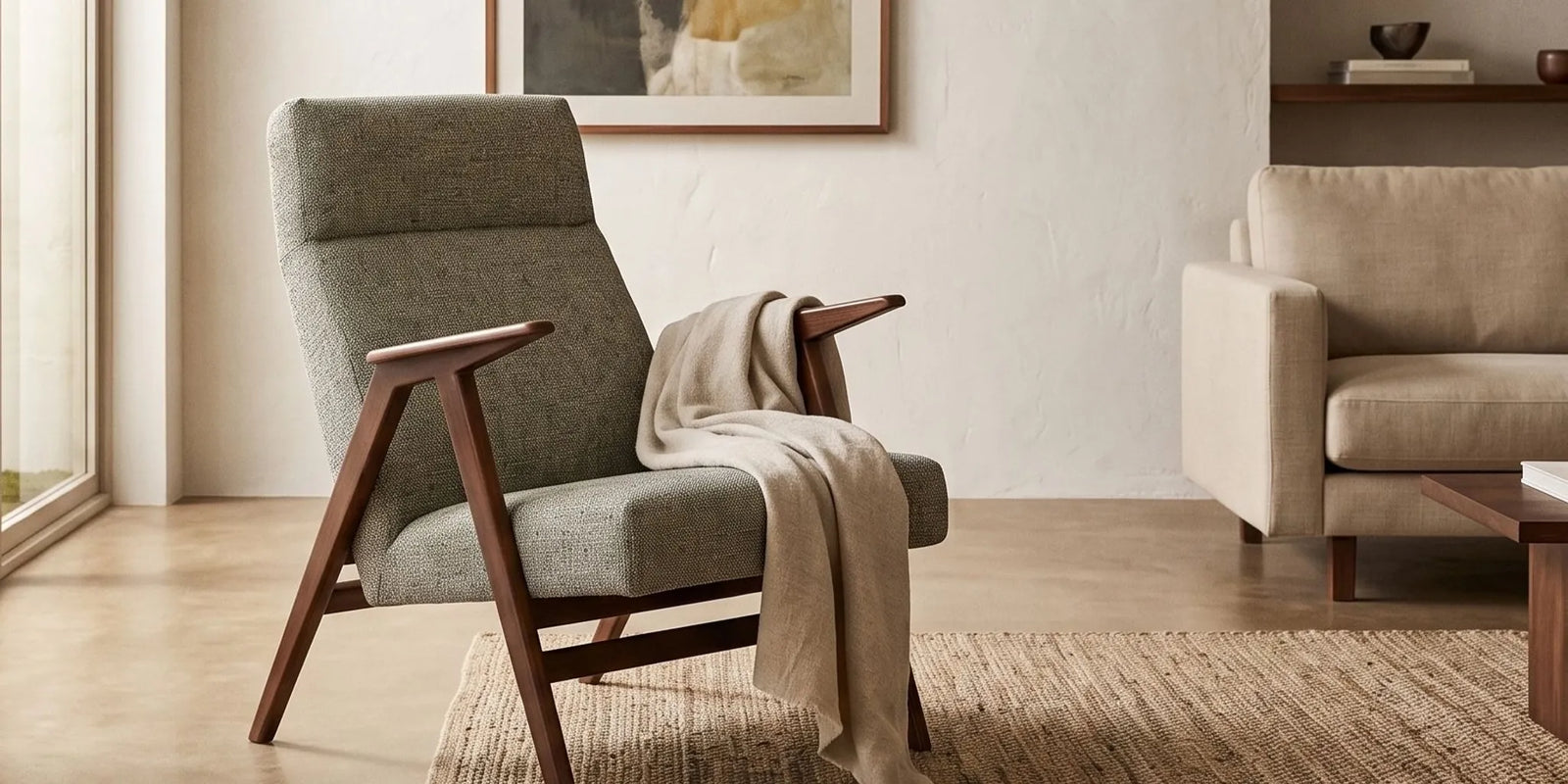
Wood and linen are especially useful foundations for this look. A wood table, cabinet, or chair adds warmth and an organic surface, while linen curtains, upholstery, or cushions soften the harder planes. You can build depth by combining finishes rather than adding more objects. Pair a matte wood surface with a lightly nubby textile, a smooth ceramic, and a woven basket. Japandi rooms commonly use natural materials such as wood and linen, along with organic shapes that keep a minimal setting from feeling sterile.2
Choose materials for how they feel in daily use as well as how they photograph. The grain of natural walnut furniture can provide enough pattern to make a neutral room feel considered without requiring ornate decoration. Vary the scale of texture, too. A loosely woven throw, a tightly woven rug, and a smooth wood surface create quiet contrast. Repeating one texture across every item can make the room look flat, while too many patterns create the clutter this style is meant to avoid.
Warm, layered lighting supports the comfortable side of Japandi. Combine daylight with a shaded floor lamp, a table lamp, or indirect wall light rather than relying on one bright overhead fixture. Soft textures, warm lighting, neutral palettes, and togetherness are recurring elements of the related Danish concept of hygge.3
Bring in greenery with intention. One sculptural plant, a branch in a simple vessel, or a small grouping of herbs can introduce life and an organic shape. Finish by removing anything that does not serve comfort, use, or character. A restrained accent should give the eye somewhere to rest, not compete with the room's natural materials.
Solid walnut can give a Japandi-inspired room warmth and depth without making the space feel visually busy. Its natural grain brings variation to a restrained palette, while a well-proportioned design can preserve the open, composed feeling that makes this approach to interiors so livable. The goal is not to make every piece look Japanese or Scandinavian. Instead, choose furniture whose material, scale, and construction support simplicity and everyday function.
Gingko's documented design identity centers on mid-century modern, Mission Style, and Asian-inspired influences rather than an official Japandi designation. Still, there is useful overlap in the emphasis on clean lines, functional beauty, natural materials, and minimal ornament. In the solid walnut furniture collection, the wood itself serves as an important visual element. Subtly different grain patterns give each piece character without relying on carved decoration, bold contrast, or a busy surface treatment.
In a quiet room, walnut can act as the grounding element that keeps neutral walls, linen upholstery, and soft textiles from feeling flat. Pair a walnut table or storage piece with a limited palette of warm whites, sand, taupe, muted gray, or other natural tones. Then allow the grain to remain visible. Too many competing finishes, glossy accessories, or decorative objects can obscure the material quality that makes the furniture effective.
This is also a practical way to work with the principle that less is more. Rather than filling every surface, select one or two substantial walnut pieces and leave room around them. Negative space gives the eye a place to rest and helps the furniture's silhouette read clearly. In a smaller apartment or living room, human-scaled proportions can make that restraint easier to maintain without sacrificing useful seating or storage.
Look for details that are purposeful: balanced proportions, a clear leg profile, a comfortable seat, or joinery that reflects how the piece is made. Gingko's collection includes seating, tables, and storage with solid walnut construction and traditional mortise-and-tenon or dovetail joinery, as documented on its collection page. Those construction details can support a room centered on craftsmanship without turning the furniture into a display of excess detail.
For a seating-focused arrangement, explore solid walnut accent chairs as an alternative to adding several small decorative pieces. A single chair with a clean profile can define a reading corner, balance a sofa, or introduce a functional sculptural element while preserving circulation. Keep the surrounding area edited, and use lighting and textiles to add comfort rather than more furniture.
Finally, remember that a Japandi-inspired room can include influences beyond one style label. Gingko's approach to walnut may sit comfortably alongside the room's Japanese and Scandinavian references while remaining rooted in its own mid-century modern, Mission Style, and Asian design sensibilities.
A Japandi-inspired living room should feel considered rather than staged. The goal is not to copy a fixed catalog of colors or objects. Instead, use balance, natural materials, practical furniture, and open space to make the room easier to live in. The following sequence gives you a clear starting point while leaving room for your home's architecture and your own habits.
As you refine the room, return to the same questions: Does the layout support everyday life? Do the materials add quiet character? Is there enough space for the room to breathe? Those answers matter more than reproducing a trend perfectly.
Japandi style is an interior approach that combines Japanese restraint with Scandinavian warmth. It favors clean lines, natural materials, quiet colors, useful furniture, and enough open space for each element to feel intentional. The goal is not an empty room, but a calm setting where craftsmanship, texture, and everyday function carry the design.
Japandi overlaps with both styles, but it brings a distinct balance of qualities. Scandinavian interiors often emphasize brightness, comfort, and approachable warmth, while Japanese-influenced rooms tend toward simplicity, natural irregularity, and visual quiet. Minimalism is a broader design philosophy about reducing excess. Japandi uses that restraint while preserving tactile materials, warmth, and practical comfort.
Begin with one well-proportioned anchor piece, then build around it with natural wood, linen or other soft textures, warm lighting, and a restrained color palette. Leave useful negative space instead of filling every surface. Choose furniture for comfort and function, and let grain, joinery, organic shapes, or a plant provide quiet visual interest.
Common missteps include treating the look as a strict beige color scheme, buying too many matching pieces, or removing so much decoration that the room feels cold. Avoid copying a checklist without considering scale and daily use. A better approach is to edit thoughtfully, mix subtle textures, preserve natural character, and choose only items that serve the room.
Thoughtful furniture can help connect clean lines, natural material character, and everyday function in a Japandi-inspired room. Browse Gingko Furniture's solid walnut furniture collection to explore pieces that can support a calm, considered living space. When you find a form that fits your room, use its proportions, finish, and purpose as a guide for shaping the rest of the space.