


September 30, 2026 10 min read
When you compare solid wood vs veneer furniture, the most useful question is not simply which material is better. It is how each piece is built, how you plan to use it, and what kind of ownership experience you want. Solid wood is made from natural lumber through the relevant structural or visible component. Veneer is a real wood surface layer applied over a core such as plywood or MDF. Both can be thoughtfully made, but they offer different possibilities for repair, finish, stability, and long-term use.
For a fuller look at material quality, construction, and lasting value, read Gingko's solid walnut furniture guide.
This guide explains what the terms mean, how to inspect furniture before buying, and how to weigh durability against budget without relying on vague labels. It also keeps an important distinction in view: veneer is not automatically low quality, and solid wood is not automatically well constructed. The details around the material are what make the difference.
With that foundation in place, start with the material shoppers usually picture first: solid wood.
Solid wood furniture uses natural lumber rather than a thin decorative layer over a panel. Depending on the design, that may describe an entire piece or specific components such as a tabletop, chair frame, leg, door, or drawer front. A careful product description should tell you which parts are solid wood, because the phrase should not be treated as a substitute for a complete materials list.
The appeal is both tactile and visual. Natural wood has variation in grain, tone, and small markings. On walnut furniture, those differences are part of the character. Two pieces made from the same species may not look identical, which gives the material a quieter sense of individuality than a perfectly repeating printed surface.
Solid wood is not maintenance-free. Natural lumber can respond to changes in temperature and humidity, and a finish still needs sensible care. Poor joinery, weak connections, or an unsuitable design can undermine an otherwise appealing material. Look for the whole construction story: how parts meet, how the piece is supported, what finish is used, and whether the maker provides clear care guidance.
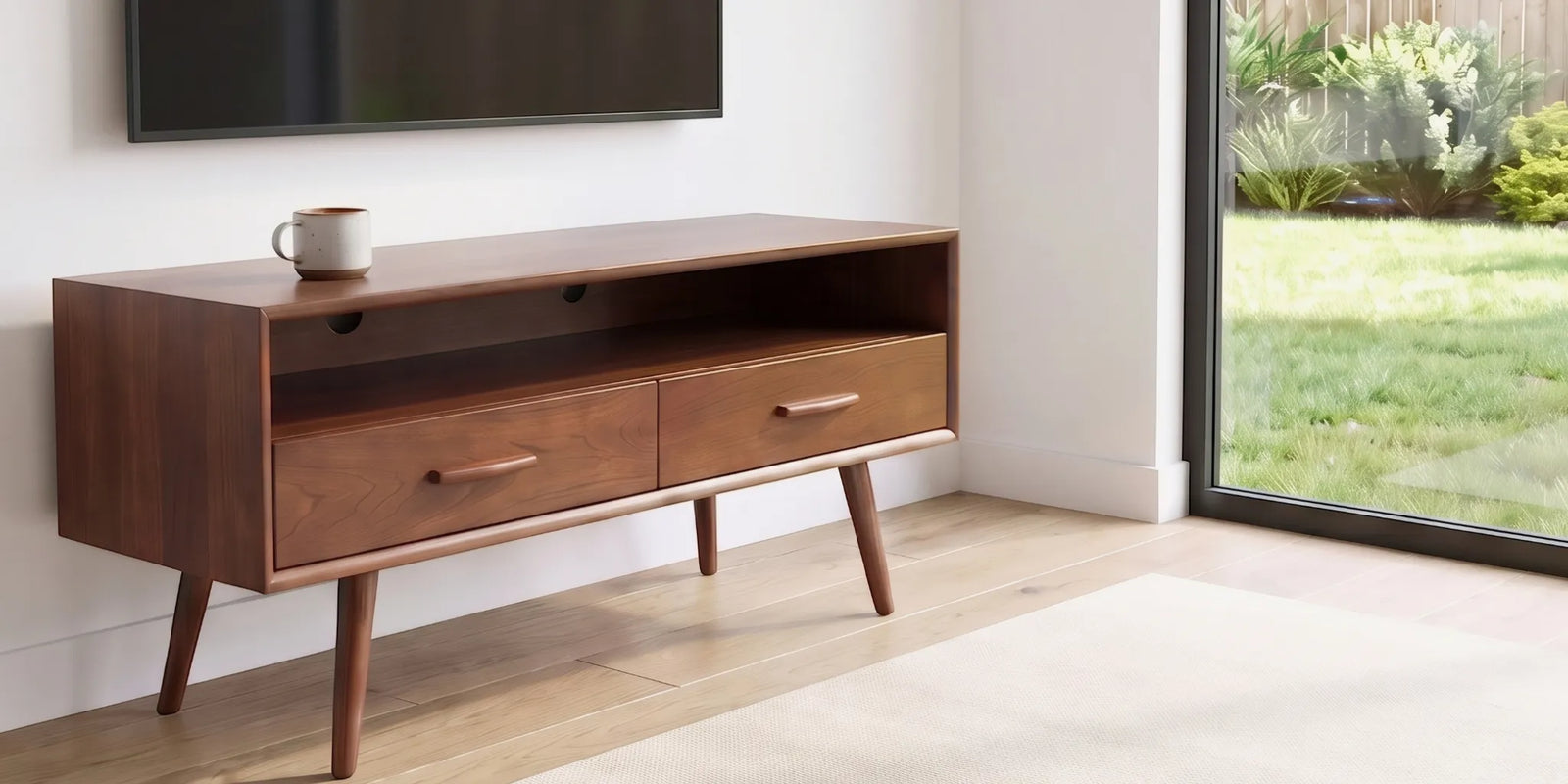
That is central to Gingko's design philosophy. Clean lines and functional beauty work best when they are supported by honest materials and construction. Gingko specializes in solid walnut furniture, and its designs celebrate natural grain while keeping proportions practical for contemporary rooms. Exact joinery details still belong to the individual product page, so verify them before treating a construction method as universal.
Veneer furniture has a thin layer of real wood attached to a core material. That core may be plywood, MDF, particleboard, or another engineered panel. The veneer supplies the visible wood appearance, while the core contributes much of the panel's structure and stability. In other words, veneer is not fake wood. It is real wood used as a surface layer.
Veneer can be a practical design choice. It uses a smaller amount of a desired wood species across a broad surface, makes consistent panels possible, and can be paired with a stable substrate. For some applications, that dimensional stability is useful. A carefully made veneered panel may be a sound choice for a door, cabinet side, or other component where a broad, consistent surface matters.
The limitations are also specific. A thin veneer surface generally cannot be deeply sanded in the same way as a substantial solid-wood surface. Water or impact damage at an edge or seam may be difficult to repair if it reaches the core. Those concerns do not make every veneer piece a poor purchase. They make accurate product information and appropriate use more important.
When a description says only "wood," ask for more detail. A useful answer identifies the surface, core, edges, and structural components. The best comparison is not solid wood versus veneer as a moral choice. It is a comparison of two construction systems against your room, habits, budget, and expectations.
Photos can suggest a material, but they rarely prove what is inside a piece of furniture. Grain that continues across an edge may indicate solid wood, while a repeated pattern or a visible seam may suggest veneer. These are clues, not rules. The reliable first step is always the manufacturer's specification, followed by a closer inspection of accessible areas.
| What to inspect | What may suggest solid wood | What may suggest veneer |
|---|---|---|
| Edges and corners | Grain or end grain appears to continue through the component. | A thin surface layer or edge band is visible at a corner. |
| End grain | The end shows the wood's natural growth pattern rather than a capped surface. | The face grain stops at the edge or changes direction abruptly. |
| Underside and interior | The same material appears on less visible structural areas, when the design calls for it. | A panel core or different substrate is visible in an unfinished area. |
| Pattern and variation | Natural variation is irregular from one section to another. | Book-matched or repeated grain may reveal a laid surface layer. |
| Product information | The description identifies solid wood components and species. | The description identifies veneer, core, substrate, or engineered panels. |
Weight can be a weak clue, but it is not a test. A heavy engineered panel is still engineered, and a lighter solid-wood design may be intentionally scaled for a smaller room. Use physical clues to support, not replace, verified product information.
Long-term performance depends on construction, finish, placement, and care. The material label helps you understand the repair options, but it does not predict a piece's future by itself. A solid-wood table with weak joinery can disappoint, while a well-designed veneered cabinet can serve its purpose for many years.
Solid wood usually gives a repair professional more material to work with. Depending on the finish and the depth of the damage, the surface may be cleaned, touched up, sanded, or refinished. That does not mean every solid surface can be aggressively stripped, and it does not make damage invisible. It means the material can offer more flexibility when a piece is worth preserving.
Veneer can also be repaired, but the approach is more limited. Light scratches may respond to a careful touch-up. Deeper damage can pass through the thin wood layer and expose the core, making replacement or a specialized repair necessary. Edges and seams deserve particular attention because moisture or impact there may cause separation.
Both materials benefit from a stable indoor environment and sensible cleaning. Natural wood can expand or contract as moisture conditions change. Veneered panels may be stable in some ways, but a wet edge, failed seam, or damaged finish can create its own problem. Keep furniture away from prolonged moisture, use the care method recommended for the finish, and avoid treating any surface as indestructible.
Also consider the role of construction. Traditional joinery, well-supported panels, accurate alignment, and a durable finish all contribute to the experience of owning furniture. Gingko's documented design language emphasizes honest construction and functional beauty. For a specific product, confirm the current listing rather than assuming that every item uses the same joinery or material arrangement.
The practical conclusion is simple: choose the construction that matches the kind of wear you expect. For a heavily used surface that you hope to maintain and refinish, solid wood may offer appealing flexibility. For a stable panel in a carefully selected application, veneer may be entirely appropriate.
There is no universal price threshold at which solid wood becomes worth it. The value depends on what you are buying, how often it will be used, how long you expect to keep it, and whether repairability matters to you. A material decision should support the way you live rather than simply signal a higher tier.
Gingko's approach places solid walnut at the center of its material story. The brand's clean-lined, mid-century modern designs let natural grain and proportion do much of the decorative work. If that character is important to you, review the specifications and images of the exact piece, then consider how it will sit alongside the rest of your room.
For a broader framework on fit, materials, and long-term use, explore this furniture buying guide. The goal is not to win an argument about materials. It is to choose furniture that earns its place in your home through useful design, sound construction, and a finish you can live with.
Use this decision process when a product page leaves you comparing labels without a clear answer.
For shoppers drawn to natural walnut and mid-century modern proportions, Gingko's furniture collection is a useful place to see how material, shape, and function work together. Review each product's current specifications rather than generalizing from one design to another.
Start with the product specification, then inspect an accessible edge, end, underside, or drawer interior. Solid wood may show grain continuing through the component, while veneer may reveal a thin edge layer or a different core. These clues are not definitive on their own, so ask the seller what the surface, core, edges, and structural components are made of.
Yes. Veneer is real wood sliced into a thin surface layer and applied to a core such as plywood or MDF. The core is not solid lumber, but the visible veneer is genuine wood. Quality depends on the substrate, joinery, edge treatment, finish, and intended use, not on the word veneer alone.
A thin veneer surface has less material available for deep sanding or refinishing. Damage at an edge or seam can also reach the core and may require specialized repair. Those limits should be weighed against the advantages of the particular construction, including its surface consistency and suitability for the application.
Usually not in the same way. Veneer may allow careful touch-ups or limited refinishing, but aggressive sanding can remove the surface layer. The correct approach depends on veneer thickness, finish, and damage, so follow the maker's care guidance or consult a qualified repair professional.
Not necessarily. A product may combine solid-wood structural parts with veneered panels or other materials. Read the complete materials description and confirm which components are solid, veneered, or engineered before making a purchase.
The difference between solid wood and veneer is useful to understand, but the better buying decision comes from looking at the entire piece. Consider the material, core, joinery, finish, room conditions, repair options, and the way you expect to use the furniture.
If natural walnut, clean lines, and functional beauty fit your home, browse Gingko's furniture collection. Review the current specifications for each piece, and contact the Gingko team if you need help understanding a product's materials or construction before ordering.