

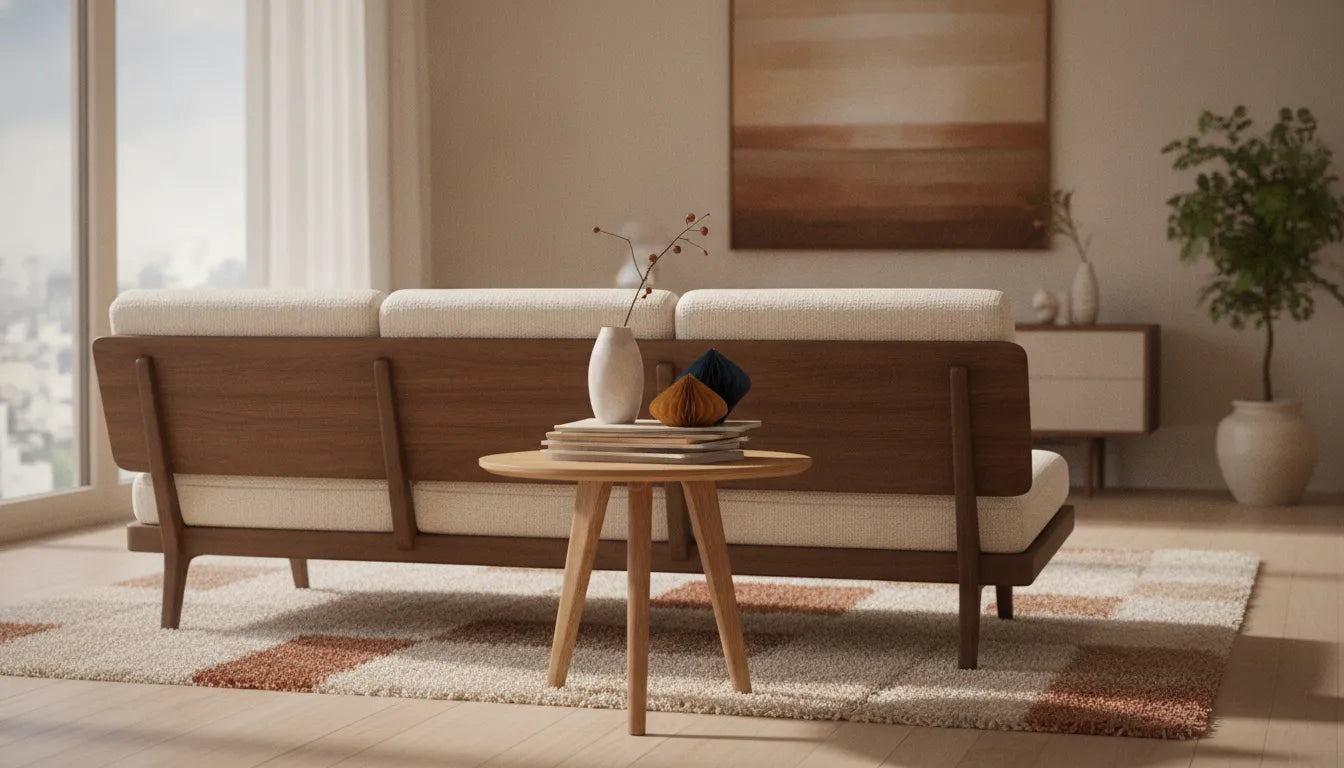

When choosing end tables for living room seating, start with the way the room works. An end table has a small footprint, but it can shape comfort. The right choice gives a sofa or chair a useful landing place for a drink, lamp, book, or remote without crowding circulation or making the seating feel visually heavy.
If you want to browse furniture with a lasting, design-led point of view, contact Gingko Furniture after you have measured your room and identified your priorities.
Before you compare finishes or silhouettes, work through four checks:
Choose end tables for living room seating by starting with the height of the seat, then compare the table's width, clearance, storage, and visual weight with the room. A table should be easy to reach, stable in daily use, and proportionate to the furniture around it.
Good decisions begin with measurements rather than a style label alone. Note the seat height, available floor space, walking paths, and what you actually want the table to hold. Gingko's guidance on measuring furniture for your living room is a useful companion as you work through those details, then consider how the table's shape and finish support the room's character.
The best end tables for living room seating make everyday use easier without crowding the room. Start with the furniture already in place, then evaluate the table by height, footprint, access, and visual weight. An attractive table that leaves no room for a lamp, book, or drink is not serving the space well.
Measure the available space beside each chair or sofa before shopping. Record the width between the seating and the nearest wall, the depth from the front edge of the seat to the wall, and the height of the arm. These measurements establish a realistic range rather than letting a table dictate the room. Also mark walking paths. A table should support circulation, not create a sharp obstacle at the edge of a walkway.
Height matters because the tabletop should feel connected to the seat. A table close to the height of the sofa or chair arm usually keeps a lamp, drink, or reading material within comfortable reach. If the tabletop is noticeably lower, it may work beside low-profile seating, but confirm that you can reach it without leaning awkwardly. If it is much higher, the table can feel visually disconnected and may interfere with a lamp or the sightline across the room.
Use the room as a whole when judging scale. A substantial sofa may need an end table with enough presence to avoid looking undersized. While a narrow chair or compact seating area may call for a smaller footprint. Leave enough space to sit down and stand up naturally. Gingko's guidance on living-room proportions and circulation is a useful companion when several pieces must work together.
Next, list what the table must hold. For a reading chair, a lamp and a book may be the priorities. Beside a sofa, you may want space for a drink, remote, phone, or small decorative object. A compact top can be ideal when the table is mainly for a lamp, while a wider surface gives shared seating more flexibility. Consider storage only when you will use it. A drawer or shelf can keep small items organized, but an open design may feel lighter in a room that already has substantial cabinetry.
Finally, assess the table's visual relationship to the rest of the furniture. Clean lines and restrained shapes can complement a mid-century modern room without competing with the seating. Solid walnut furniture can add natural warmth and connect the table to other wood accents, but the goal is coordination rather than a perfectly matched set. Buyers who value authentic materials and everyday function should evaluate both the material character and the table's practical role. Before deciding, revisit the furniture buying guide to confirm your measurements, circulation plan, and priorities for long-term use.
The most useful end table is usually the one that feels effortless to reach. Begin with the sofa or chair it will serve, then consider the table's width and visual weight in relation to the surrounding furniture. A table can be beautiful on its own and still feel awkward if a seated person must lean too far. Reach around an arm, or look past an oversized top to use it.
For a sofa-side table, compare the tabletop with the height of the sofa seat and arm. A surface that sits close to the arm height is generally easier to use for a drink. Reading lamp, remote, or book without lifting your shoulder or bending sharply. The right relationship is not a rigid rule. A slightly lower table can look calm and intentional, while a taller table may work beside a high-armed chair. What matters is that the surface suits the way you sit and reach.
Think about the primary user before choosing a height. If the table will hold a lamp or objects that are used while reclining, test the reach from the actual seat rather than judging the piece while standing. For a reading chair, measure from the chair's seat and arm. A table that works beside a low lounge sofa may feel too low beside an upright accent chair.
Width affects both function and proportion. The tabletop needs enough room for its intended use, but it should not crowd the seat or interrupt a walkway. Consider what must share the surface. A lamp needs a stable footprint, while a table used mainly for a drink and a phone can be visually lighter. If the table will sit beside a broad sofa, a very narrow design may appear lost. Beside a compact chair, the same table could dominate the corner.
Look at the base as well as the top. Open legs and a raised surface can preserve a sense of visual lightness, while a broad, solid form carries more visual weight. Neither approach is automatically better. Match the table's presence to the sofa, chair, rug, and nearby case goods so one small piece does not feel disconnected from the room.
Record the seat height, arm height, available width, and depth beside the seating. Then measure the clearance needed for people to walk past and for drawers, doors, or reclining mechanisms to operate. Mark the proposed footprint on the floor with painter's tape or folded paper. This simple test reveals whether the table will pinch circulation before you bring it home.
For a broader preparation checklist, see this guide to measure furniture for your living room. Product-specific dimensions and features should still be checked on the current product page. Careful measurements let you compare end tables by practical fit, not just by appearance.
The right amount of space around an end table is less about memorizing a universal number and more about preserving comfortable movement. Start by observing how people use the room. Can someone sit down without brushing the table? Can a lamp be reached from the sofa? Is the route between the seating area and a doorway still clear? These practical questions give you a better answer than a measurement copied from a showroom layout.
Measure the sofa, chair, rug, lamp, and nearby openings together. The table should feel connected to the seat without making the arrangement look compressed. A room-planning approach that considers living room layout and furniture scale can help you judge the relationship between occasional tables, seating, and circulation before you shop.
| Setup | What to check | Best adjustment when space is tight |
|---|---|---|
| Beside a sofa | Keep the table close enough for a seated person to reach a drink, book, or lamp. Check that the sofa arm, table edge, and rug do not create a pinched corner. | Choose a narrower silhouette or reduce the table's visual weight rather than blocking the route beside the sofa. |
| Beside a reading chair | Test the reach from the chair's usual sitting position. Account for the lamp base, a book, and the direction in which the chair is pulled out or turned. | Use a compact surface that serves the chair without competing with the chair's footprint or the nearest walkway. |
| Compact room or apartment | Protect the primary path through the room first. Make sure the table does not overlap a door swing, interrupt a passage, or force people around the seating. | Consider a small or nesting arrangement that can provide surface area when needed and occupy less room when it is not in use. |
Rugs deserve special attention. A table that sits partly on a rug and partly on the floor can look intentional, but only if it remains stable and does not catch a foot. If the rug has a thick pile or a curled edge, shift the table, use an appropriate rug pad, or select a more stable placement. The goal is a secure landing for everyday objects, not a perfectly symmetrical diagram.
For a narrow walkway, mark the proposed table footprint with painter's tape and walk the route at different times of day. Open doors, move a chair as someone would in real use, and check the lamp cord path. In a compact room, nesting tables can offer flexibility, while a single smaller table may create a calmer visual field. Search results commonly distinguish compact and nesting tables, but the useful choice depends on your actual circulation and routine, not the label alone.
Finally, check the table's current product dimensions and features before ordering. A room plan can suggest the right scale, but the specific height, width, depth. And base shape determine whether it will clear the sofa, lamp, rug, and walkway in your home.
Shape affects more than appearance. It changes how easily people move around the seating area, how much surface you can reach, and whether the room feels crisp, relaxed, or visually busy. The best end tables for living room seating support the way your household actually uses the space while maintaining a comfortable relationship with the sofa or chair.
A round table is a useful choice beside a sofa when people regularly walk past that corner. Its curved edge has no sharp corner projecting into the route, and the circular silhouette can soften a room filled with linear furniture. Round shapes also work well beside a reading chair or between pieces with different angles. Choose one when you want a compact footprint with a more relaxed visual rhythm. Check the diameter against the seat and the reach of the person using it, since a small circle may not hold both a lamp and everyday items comfortably.
Square end tables suit rooms with a clear, symmetrical arrangement. Beside a substantial sofa, the equal sides can echo the sofa's grounded presence without competing with it. They are practical when the table will serve more than one seat, because the surface is easy to approach from several directions. The tradeoff is circulation: a square corner occupies a defined amount of space, so confirm that its outer edge will not narrow a walkway. A square form can also feel rigid if every other piece in the room has a strong grid-like shape.
Rectangular tables are often the natural fit for a long sofa arm or a narrow gap between seating and a wall. Their extended surface gives a lamp, books, and a drink more room to coexist, while the longer axis can reinforce the room's horizontal lines. Use the proportion to add visual order, not simply to fill the largest available space. A table that extends far beyond the arm of the sofa may look disconnected and make the corner feel heavy.
Nesting tables offer two surfaces that can stay grouped or separate when guests need another place to set something down. They are especially useful in compact rooms, where flexible pieces can provide occasional capacity without requiring two permanent footprints. When nested, inspect the leg placement and stability of the smaller table. When separated, make sure both tables leave a clear route and do not create a collection of obstacles around the seating.
Think of round, square, rectangular, and nesting shapes as different responses to traffic, seating, and scale rather than fixed style categories. Several styles can work in a living room; the strongest choice is the one that makes daily movement and use feel effortless.
Related products

Make a comfortable spot for your screen, a good book, or a favorite snack with the Soho Laptop Table.
View product
1-inch thick Solid Walnut table top featurinng live edge detail
View product
The Borgen is finished in a warm brown stain which showcases the beauty of the Walnut wood grain.
View productThe best end table earns its place by making ordinary routines easier. Before choosing a shape or finish, identify what needs to land beside the seat. A reading lamp, a stack of books, a remote, a drink, or a pair of glasses each calls for a slightly different kind of support. This practical inventory matters as much as the room's visual style, especially for homeowners who value authentic materials, everyday function, and clear buying guidance.
An open tabletop is the most flexible choice when the main need is a lamp, a drink, or a small arrangement that should stay visible. It also keeps the area visually light, which can be useful beside a substantial sofa or in a compact room. If books, remotes, and chargers tend to collect around the seat, a shelf below the top adds useful capacity without requiring you to open a drawer every time.
Drawers are better for items you want close but out of sight. They can hold remotes, reading glasses, coasters, and other small objects that otherwise make a living room feel unsettled. A drawer is not automatically the right answer, though. If you routinely set down larger books or want a lamp to remain the focal point, an open surface may be more convenient than extra concealed storage.
Nesting tables can serve changing routines. Keep the smaller table tucked beneath the larger one when the room is quiet, then separate the pair when guests need another surface. This arrangement can be particularly useful when circulation changes throughout the day. It gives you flexibility without committing every inch of floor space to a separate table.
A drink-table scale works when you need a compact landing spot rather than a broad display surface. Place it close enough to reach comfortably from the chair or sofa, but not where it interrupts the path through the room. It can support a glass, phone, or book while preserving more open floor around the seating group. For larger lamps, multiple books, or a more substantial visual anchor, choose a wider surface instead.
Measure the area beside the seat before shopping. Note the available width, the height of the arm, and the route people use to enter, leave, or pass through the room. Proportion and circulation should guide the decision, not a table's appearance in isolation. A useful table should feel integrated with the seating, not like an obstacle added afterward. Gingko's guide to living room layout and furniture scale offers a broader framework for coordinating tables, seating, and circulation.
Finally, consider the surrounding composition. A simple table can balance a sculptural sofa, while a piece with more visual presence may help anchor a lighter seating arrangement. If you are pairing the table with mid-century modern accent chairs, compare their lines and spacing rather than matching every detail. Product-specific dimensions and features should always be checked on the current product page before you decide that a table will suit your lamp, storage needs, and daily routine.
The right table should feel related to the furniture around it, not as though it came from a matching set. Start by identifying the room's strongest visual signals: the wood tone, upholstery color, metal accents, and overall line of the sofa or chair. Then choose an end table that repeats one or two of those signals while bringing a slightly different shape or finish to keep the room layered.
Material is often the easiest way to create coherence. In a room with warm wood furniture, a wood end table can make the seating area feel settled and intentional. Natural walnut character can also add depth without requiring every wood surface to be identical. If the room already has several prominent wood tones, look for a finish that relates in warmth rather than trying to match the color exactly. Small variations tend to look more collected and lived-in than a perfectly coordinated suite.
Finish changes the impression of the same basic table. A quieter, low-sheen surface can support a room with textured upholstery and woven accents. While a more visibly polished finish may work better when the surrounding pieces have a sharper, more formal presence. Keep the daily setting in mind, too. The surface should look good beside a lamp, a book, or a drink, not only in an empty-room photograph.
Silhouette determines how much space the table appears to occupy. A substantial sofa can usually support a table with a confident top and sturdy-looking base. Next to a slender lounge chair, a lighter silhouette may preserve the sense of openness. Consider the legs, corners, and negative space beneath the top. Open space can make a compact room feel less crowded, while a drawer or enclosed base may provide useful visual weight where the seating looks too delicate.
Mid-century modern rooms often benefit from clean lines, functional design, and visual lightness. That does not mean every piece needs tapered legs or an identical period shape. A simple table with clear proportions can sit comfortably among those influences while giving the eye a place to rest. For more background, explore this guide to mid-century modern furniture design.
Contrast can be useful when it is deliberate. Pair a rounded table with a boxier sofa, or place a visually quiet table beside a chair with a strong pattern. You can also repeat a detail from elsewhere in the room, such as a dark metal accent or a warm wood note, without copying the entire furniture style. The goal is a conversation between pieces, not a showroom display.
If you are deciding between adjacent design directions, comparing furniture styles can help clarify which shapes, materials, and proportions feel most natural in your room. Above all, choose a table that supports the way you live and remains useful as the rest of the decor changes. A restrained design with lasting relevance is often more versatile than a highly themed accent.
A traditional side table is not the only way to give a seat a useful surface. The best substitute depends on what you need nearby, how much floor space you have, and whether the piece should disappear into the room or add visual interest. Consider these alternatives before deciding which of the many end tables for living room arrangements will serve you best.
Nesting tables are useful when your needs change throughout the day. Keep the smaller table tucked beneath the larger one for a compact footprint, then separate them when guests need another place for a drink, book, or small lamp. Their flexibility is the main advantage. The tradeoff is that the smaller table may not be as convenient when it is nested. And the layered look may feel busy in a room that already has many objects.
A sturdy stool can work beside a lounge chair when you want a simple perch for a drink or a book rather than a dedicated storage piece. It is easy to move and can keep a small seating area visually open. However, a stool usually offers less surface area and no place to conceal remotes or reading materials.
A slim pedestal is another option for tight spaces or a corner that needs only a small landing spot. Its narrow profile can preserve circulation and keep attention on the seating. Before choosing one, consider how stable it feels in daily use and whether its top is large enough for the objects you actually place there.
If a sofa sits near a console, the console top may provide a convenient surface without adding another table beside the arm. This approach works best when the console is close enough to reach comfortably but does not obstruct a walkway. Keep everyday items organized so the arrangement remains intentional rather than becoming a drop zone.
Built-in shelving, a cabinet, or another existing storage unit can also handle the job. This is practical when you need more concealed storage than a small side table provides. The compromise is accessibility: a cabinet across the room may store items neatly but will not replace a surface within easy reach.
Whichever alternative you choose, prioritize a sturdy piece and follow its manufacturer instructions. If a tall or top-heavy item calls for extra protection, use appropriate anti-tip hardware as directed. The U.S. Consumer Product Safety Commission recommends sturdy furniture, following manufacturer instructions, and securing top-heavy furniture with anti-tip brackets. These simple checks matter more than choosing a substitute solely for its appearance.
Begin with the seat height and measure the space beside the sofa or chair. A useful table should be easy to reach without forcing you to lean, while leaving enough room for people to walk comfortably. Check the current product dimensions against your room measurements before ordering.
Choose the surface and storage you will actually use. A lamp, drink, book, or remote may call for a clear tabletop, while a shelf or drawer can contain smaller items. If the table will serve a reading chair, prioritize reach and stability over extra decoration.
Neither shape is universally better. Round tables can soften a room and work well where people move around corners, while rectangular tables often make efficient use of the space beside a sofa. Let the seating layout, walkway, and surrounding silhouettes guide the choice.
Nesting tables, a compact stool, or a slim pedestal can provide a useful landing spot when space is limited. Built-in storage or the edge of a nearby console may also work, but each alternative should remain stable and leave circulation clear. For safety, the CPSC recommends sturdy furniture and following manufacturer instructions when securing furniture: CPSC Anchor It guidance.
Repeat one or two qualities already present in the room, such as material, finish, line, or visual weight. Clean-lined furniture can support a mid-century modern setting, while a contrasting shape can add interest when its scale still feels balanced. Favor a table that complements the room without making every piece identical.
The right end table can bring practical support and a more intentional sense of proportion to your living room. Browse Gingko's furniture collection with your room measurements, seating height, and daily routines in mind. For help comparing pieces or narrowing your options, contact Gingko Furniture and share what you are looking to create.